

During a busy holiday season spent reminiscing with family and friends about some of our favorite films from the past year, I was amused to realize that my most memorable theatrical experience of 2025 happened while watching a film I didn’t even enjoy. Despite my anticipation for Zach Cregger’s horror-comedy, “Weapons,” the film fell flat for me. I found it too scattered, indecisive and overreliant on its comedic moments. As a theatrical experience, however, “Weapons” couldn’t be beat. The audience — filled with both critics and early viewers with a ticket to an advanced screening — was eager to see what Cregger’s mysterious film had in store for them. They were ready to be toyed with and shocked, and when the film got going, their oversized reactions kept me entertained even when the film couldn’t. Granted, I also found this grating, depending on when these responses felt warranted. But when Amy Madigan’s deliciously wicked villain, Aunt Gladys, finally appeared in her blunt wig with lipstick smeared all over her teeth, even I couldn’t resist offering up some guffaws of my own. The audience was lapping it up, and soon after, word of Madigan’s unmissable performance spread so quickly that this late-summer freakout film became a bona fide blockbuster.
“Weapons” was such a hit that it overperformed at the box office, with revenue soaring past projected expectations. But more importantly, it was a film that got people talking so much that many who had no prior plans to see it made an effort to go to the theater to form their own opinion. That was, without question, largely Madigan’s doing, and over the weekend, the industry vet took home a well-deserved Critics’ Choice Award for her performance. And while Madigan is a beloved, Oscar-nominated character actor, she’s not necessarily what many — at least those with power in Hollywood — would consider a major, ticket-selling movie star.
(Warner Bros. Pictures) Amy Madigan as Aunt Gladys in “Weapons”
To figure out what constitutes a real blockbuster these days, one must first mourn the category’s past.
That definition, like many others in Hollywood, is changing fast. Since the streaming boom, studios have been scrambling to figure out exactly what it is that viewers want to see on the silver screen, and their expectations frequently fall short. Even with all of their star power and familiar characters, films like ‘Thunderbolts*” and “Snow White,” which would’ve been guaranteed successes less than a decade ago, failed to move the critical and commercial needles stateside. On the other hand, original films like “Weapons,” “Materialists” and “Sinners” sold out theaters left and right. Granted, those movies also had big stars attached, but they weren’t the ones driving ticket sales; the viewers were. Audience buzz is changing the way we go to the movies. Viewers don’t just want pretty celebrities, powerful superheroes and recycled ideas; they want truly memorable shared experiences. The grapevine is more powerful than the studio pipeline, and moviegoers taking it upon themselves to dictate what becomes popular are the ones who will make or break a film’s blockbuster status throughout the coming year.
Marketing will help fuel the conversations, too. It’s worth noting that the marketing for “Weapons” cleverly avoided revealing more than a brief glimpse of Madigan’s Aunt Gladys in the months leading to the film’s release — one of the great modern advertising tactics practiced to great success by the teams behind “Longlegs” and “Cloverfield.” This works like a charm in horror, where the trick is to never reveal too much, too soon.
But marketing isn’t everything. In fact, it often fails to strike the intended chord with prospective viewers. Take “Materialists,” a film that seemed like a fresh take on the 2000s-era romantic comedy thanks to its earliest teasers and trailers. That feeling intrigued some viewers while putting others off. (The tired “chick flick” debate may never fully die.) But the film itself is far from your average rom-com, more interested in the mechanics and machinations of modern dating than its lovable foibles.
When it was released in June last year, “Materialists” quickly sparked debate among moviegoers for the eccentricities of its screenplay and cast, and the ire of those who felt the film was mismarketed. The difference in response kept the conversation going long past the initial release date. Though the film finished third at the box office following its opening weekend, behind the live-action remakes of “Lilo & Stitch” and “How to Train Your Dragon” — already an indicator of the viewers’ intrigue among tired IP — its cultural mark is far more significant. No one finished out 2025 talking about Disney bastardizing everyone’s favorite precocious blue alien, but “Materialists” was still driving conversations and reactions well through the end of the year. Audiences wanted to make up their own minds and talk about the film with their friends, even if those discussions were just virtual. The movie’s opening weekend competition may have had more monetary success, but “Materialists” has the staying power of a real blockbuster.
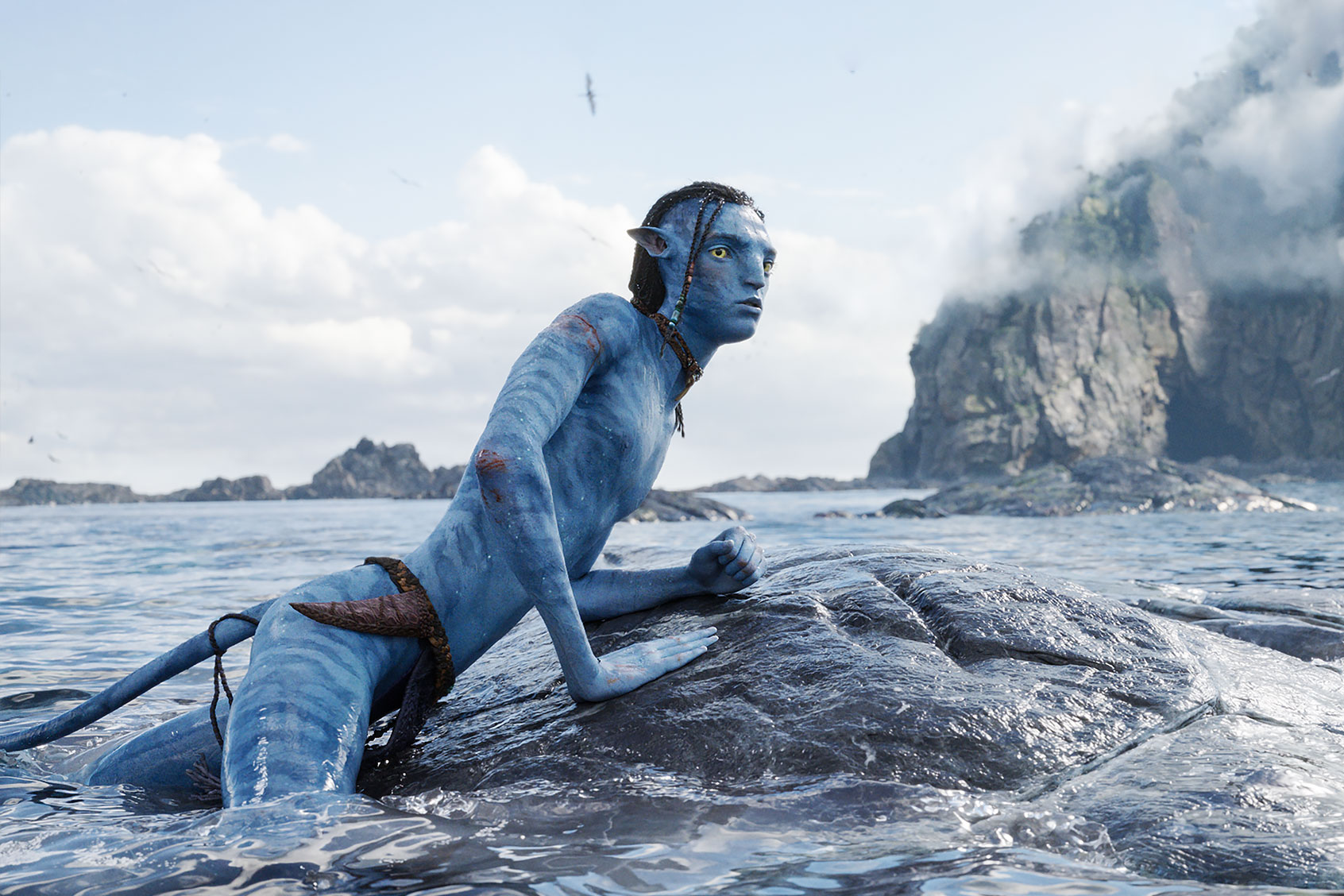
(Photo courtesy of 20th Century Studios) Lo’ak (Britain Dalton) in “Avatar: The Way Of Water.”
Viewers loved going to the movies for those big-budget spectacles because they were a means of transportation. They escorted moviegoers to other worlds. Those films left viewers talking long after they departed the theater. Blockbusters were defined by everything that went into their production, yes, but they were just as notable for their legacy.
But to figure out what constitutes a real blockbuster these days, one must first mourn the category’s past. Steven Spielberg’s “Jaws” popularized the term in the late ’70s, and by the next decade, it was a household phrase. In the 1980s, lucky moviegoers of the blockbuster heyday were treated with films like “Raiders of the Lost Ark,” E.T.,” “Ghostbusters” and “Back to the Future”; films that weren’t necessarily designed to become franchises, but had the big budgets, flashy stars and studio spectacle that comprised your typical blockbuster. In the following decades, particularly after the turn of the century, studios became overreliant on adapting existing properties in an attempt to ensure their return on the massive investment that goes into making these films. (Fair enough, I suppose, but they also created the monster known as the “cinematic universe,” so.) Before long, the number of original blockbusters dwindled to a few movies a year, such as “Inception,” “Avatar” and anything released by Pixar that wasn’t already part of one of the studio’s existing franchises. Before long, even Pixar wasn’t guaranteed their usual summer blockbuster hit, as last year’s “Elio” demonstrated when it failed to make an impression among Disney’s other theatrical fare.
Want more from culture than just the latest trend? The Swell highlights art made to last.Sign up here
We could blame the death of the blockbuster as we know it on audience fatigue, streaming wars, chronic sequelitis, fewer lovable movie stars, and a litany of other causes. But remove all of that talk of numbers and industry business and zoom out. Viewers loved going to the movies for those big-budget spectacles because they were a means of transportation, so to speak. They escorted moviegoers to other worlds, immersing them in the high-flying, dangerous adventures of Indiana Jones or Ellen Ripley. Those films left viewers talking long after they departed the theater, ready to relive memories and quotes over the dinner table, at school and at parties. Blockbusters were defined by everything that went into their production, yes, but they were just as notable for their legacy. Rarely do we remember the blockbusters that flop, after all. When was the last time you had a conversation with someone about Tom Cruise and Cameron Diaz’s 2010 stinker, “Knight and Day”?
It’s no wonder, then, that the shared theatrical experience is what has come to define a blockbuster. We live in an exhausting yet discourse-fueled age, and in this case, that means moviegoers are desperate to talk (and argue) about something a bit less dire than the most sinister global headlines. Reprieve can be found at the movies — whether in the laughter, the screams and the audible reactions, or the heated and excited discussions that happen after the credits roll. Films like “Sinners” and “Marty Supreme” had both. And though “Sinners” was a more conventional monetary success on top of being a dialogue-starter, “Marty Supreme” has gotten viewers talking even without a massive box office return. Before it leaves theaters, the film stands to make even more money from audiences who have only, so far, been witness to reactions. It seems that many can’t curb their curiosity when their friends and critics alike can’t stop describing a film as “electric,” and it helps that the movie’s star, Timothée Chalamet, has the exact charismatic pull of the actors in old-school blockbusters.
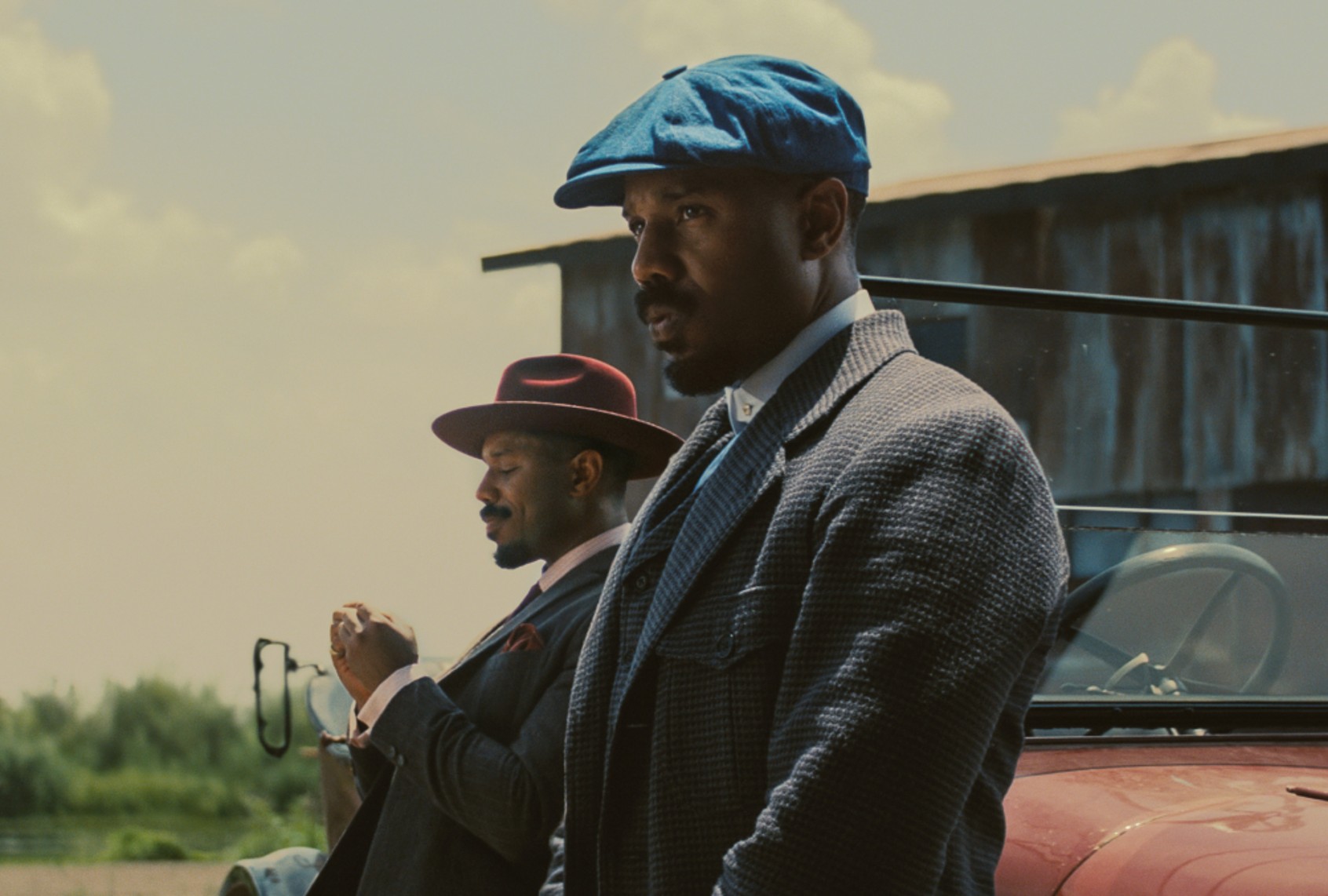
(Courtesy Warner Bros. Pictures) Michael B. Jordan as Smoke and Stack in “Sinners”
We know with some certainty that the year ahead will be filled with traditional-style blockbusters. “Avengers: Doomsday” is on track to make one kajillion Marvel bucks, while Christopher Nolan’s “The Odyssey” was selling out theaters a year in advance when first tickets went on sale over the summer. And while viewers will definitely be talking about those classic spectacles, I can already foresee the chatter for less-typical candidates lasting longer and being far more impactful. The Tom Cruise-starring, Alejandro G. Iñárittu-directed original film “Digger” lit up social media over the holidays when its first teaser was released. Emerald Fennell’s “Wuthering Heights” adaptation has been raising eyebrows and dividing prospective viewers since it was first announced. And Spielberg’s “Disclosure Day” — the director’s first summer blockbuster since 2008’s “Indiana Jones and the Kingdom of the Crystal Skull” — will be the must-see film of the season, standing out from the summer’s franchise competitors. Whether any of these films will actually be good doesn’t even matter. What’s important is that they’re going to spark conversations and unite viewers. They’re going to create memories. They’re going to do exactly what blockbusters should do. And that’s not even considering all of the movies that will become surprise, runaway hits upon their release. But that’s up to you.
Read more
about blockbusters


