


Not too long ago, “Bridgerton” was held in the highest esteem in the meeting place between TV fantasy and drab reality. Cafes hosted themed teas. String quartets strummed their way through classical covers of pop hits. Party promoters pitched balls inviting club regulars to trade their short skirts for shoe-grazing gowns.
And today? Barely a week after the Regency-style drama’s fourth season resumed, you’re much more likely to stumble into a “Heated Rivalry” night at your local drinking hole than any recreations of the ‘ton’s gracious luxury. Three months after the hockey romance premiered on HBO Max, the world remains obsessed with Ilya Rozanov and Shane Hollander, as well as the actors who play them, Connor Storrie and Hudson Williams. More accurately, as Storrie joked in his recent “Saturday Night Live” monologue, it’s women doing the pining.
Compared to Netflix’s established period hit, the prospect of two pro hockey stars falling for each other holds more heat than the forbidden affair blossoming between Benedict Bridgerton (Luke Thompson), a nobleman, and Sophie Gun (Yerin Ha), a maid and illegitimate daughter of a lord.
(Sabrina Lantos/HBO Max ) Connor Storrie and Ksenia Daniela Kharlamova in “Heated Rivalry.”
This is the first time that new “Bridgerton” episodes dropped amid another serialized romance’s cultural mania. Nobody is suggesting viewers are choosing one over the other; different as they are, their audiences overlap. Still, it can’t escape notice how quaint Benedict and Sophie’s assignations appear in the wake of Illya and Shane’s famished banging, regardless of their shared “cottage” settings. The overall ho-hum reaction to the Netflix drama’s Cinderella storyline may have something to do with how long it took Ben and Soph to smash compared to Illya and Shane’s sex-forward relationship.
But there’s also the sensation that this new season is setting us up to fully appreciate the next stage of the revolution that “Bridgerton” already began, and that the “Heated Rivalry” craze confirms we’re eager to embrace. Both shows foreground queer characters – bisexual men and women, specifically – whose attractions aren’t discounted or given short shrift.
“Heated Rivalry”’s Ilya loves men and women, so does Benedict Bridgerton — and Francesca (Hannah Dodd), Benedict’s newly widowed sister. “Bridgerton” threw coming-out parties for both at the end of Season 3, when Benedict tumbled into the sheets with the convention-flouting Lady Tilley Arnold (Hannah New) and her lover Paul Suarez (Lucas Aurelio), while Francesca married the equally introverted John Stirling, the Earl of Kilmartin (Victor Alli).
The show’s conscious racial integration of 19th-century society, which was once considered revolutionary, is now as standard as its happy endings. Overcoming the piddly obstacle of the class barrier supposedly dividing Benedict and Sophie was less of a question than a matter of which divine device would be manufactured to smooth their way to the altar.

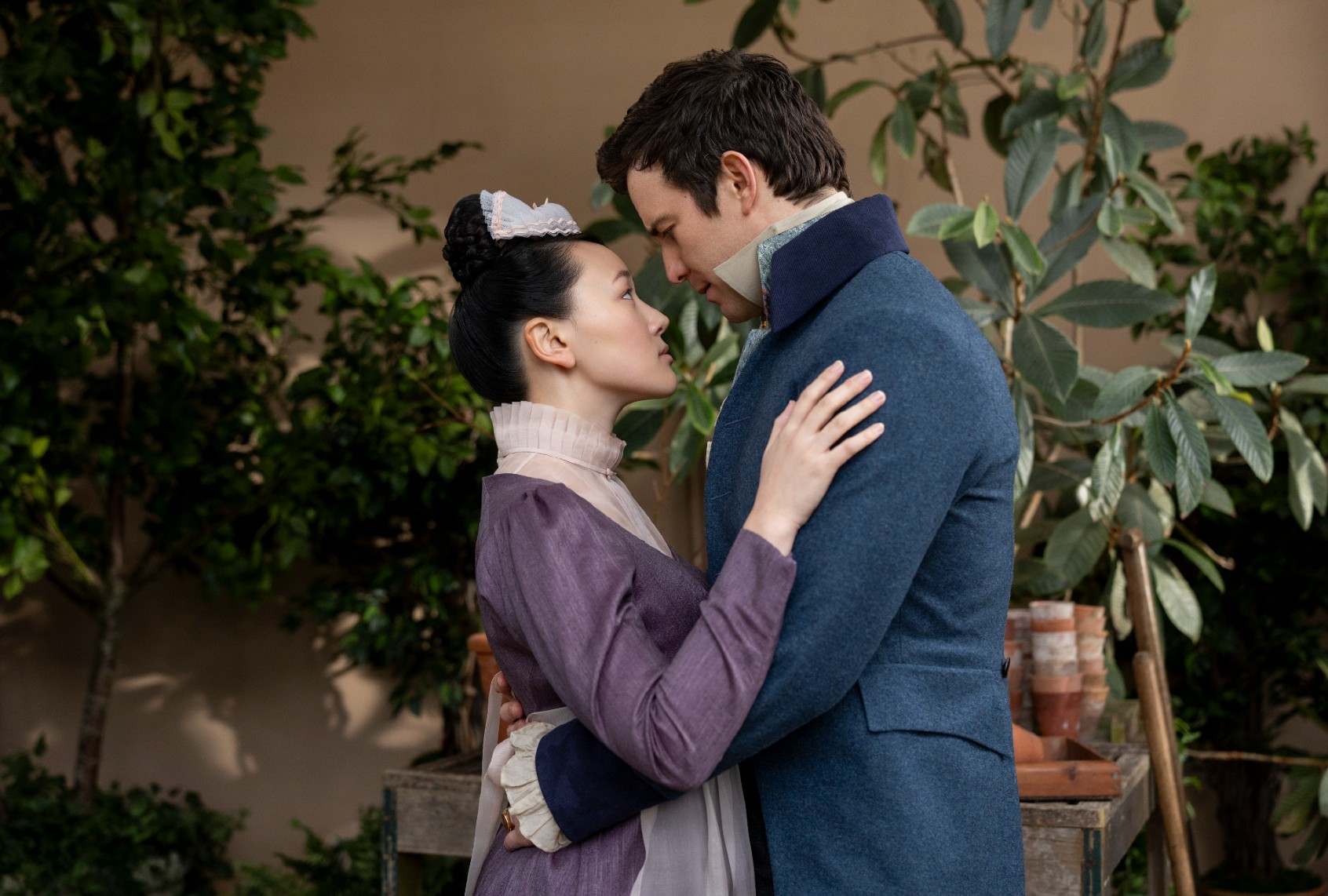
(Liam Daniel/Netflix) Yerin Ha as Sophie Baek and Luke Thompson as Benedict Bridgerton in “Bridgerton.”
It can’t escape notice how quaint Benedict and Sophie’s assignations appear in the wake of Illya and Shane’s famished banging, regardless of their shared “cottage” settings.
But Ilya and Shane risk far more than reputational ruin in “Heated Rivalry.” Taking their relationship public poses a risk to their livelihoods and personal safety. There’s real danger in their taboo affair, and that makes it especially hot.
Benedict’s first on-screen encounter was satisfying too, validating his stirrings for both sexes by presenting it to the audience instead of merely hinting at his orientation. Francesca, meanwhile, seems to have enjoyed John’s company more than his sexual technique.
That doesn’t depreciate their love but, rather, contextualizes Francesca’s fertility frustrations and her inability to achieve a “pinnacle,” as she put it, during intercourse. But her quiet excitement upon receiving John’s cousin Michaela Stirling (Masali Baduza) for an unexpected visit to their London home intimates that Cupid isn’t finished with those two, either.
That we’re contemplating these shows’ import in relation to each other indicates how starved viewers are for realistically developed romance and honestly rendered desire.
Cultural analysts are still puzzling over what makes “Heated Rivalry” so enduringly popular. It isn’t simply about the sex — although, yes, it certainly helps that the cinematography and intimate choreography amplify Storrie and Williams’ physiques.
But what has taken the public by surprise is the fervor with which the audience has consumed Jacob Tierney’s adaptation of author Rachel Reid’s hockey romances – and rewatched those episodes, many times. Like “Bridgerton,” our “Heated Rivalry” obsession is related to a hollow longing for connection pervading society right now. But where viewers passionately seized on “Bridgerton” to seek relief from the midwinter malaise of the pandemic, the wave of “Heated Rivalry” fandom contradicts a supposed mass unease with eroticism.
You may be familiar with the headlines about the 2025 Teens & Screens survey finding that Gen Z collectively cringes at onscreen depictions of sex. This is a surface reading of what UCLA’s Center for Scholars & Storytellers finds regarding its respondents’ views concerning relationships. Yes, 60.9% said they want to see more representations of friendship than sex onscreen, but that is related to their lack of interest in watching toxic relationships play out, one of the tropes they’re least interested in seeing.

(Sabrina Lantos/HBO Max) Connor Storrie in “Heated Rivalry.”
Ilya and Shane place sex before emotional intimacy, which would seem to refute those findings. But so does the “Bridgerton” enemies-to-lovers model defining its opening seasons. Whatever people may say they want, tension-free romances are boring. But so are heteronormative ones, especially in a Regency-styled world, a point of agreement shared by showrunner Jess Brownell and Quinn when Brownell decided to change the character originally known as Michael into Michaela.
Like “Bridgerton,” our “Heated Rivalry” obsession is related to a hollow longing for connection pervading society right now. But where viewers passionately seized on “Bridgerton” to seek relief from the midwinter malaise of the pandemic, the wave of “Heated Rivalry” fandom contradicts a supposed mass unease with eroticism.
Francesca and Michaela’s upcoming hero romance has been in motion for some time and promises to grant queerness a front-and-center visibility that was cut short when Benedict ended his romance with Lady Tilley and Paul. And yet, “Bridgerton” also endorses Benedict’s queerness in the latest season’s sixth episode, when he comes out to Sophie.
“I am capable of caring for you, just as I have cared for women I have known who are of the ‘ton,” he says, before pointedly adding, “just as I have cared for some men whom I have known intimately. And I refuse to be at all ashamed about that.”
In that exchange, “Bridgerton” speaks aloud its writers’ dedication to underscoring Benedict’s security in his queer identity – an element it has in common with “Heated Rivalry” and its portrayal of Ilya’s unashamed libido.
Want more from culture than just the latest trend? The Swell highlights art made to last.Sign up here
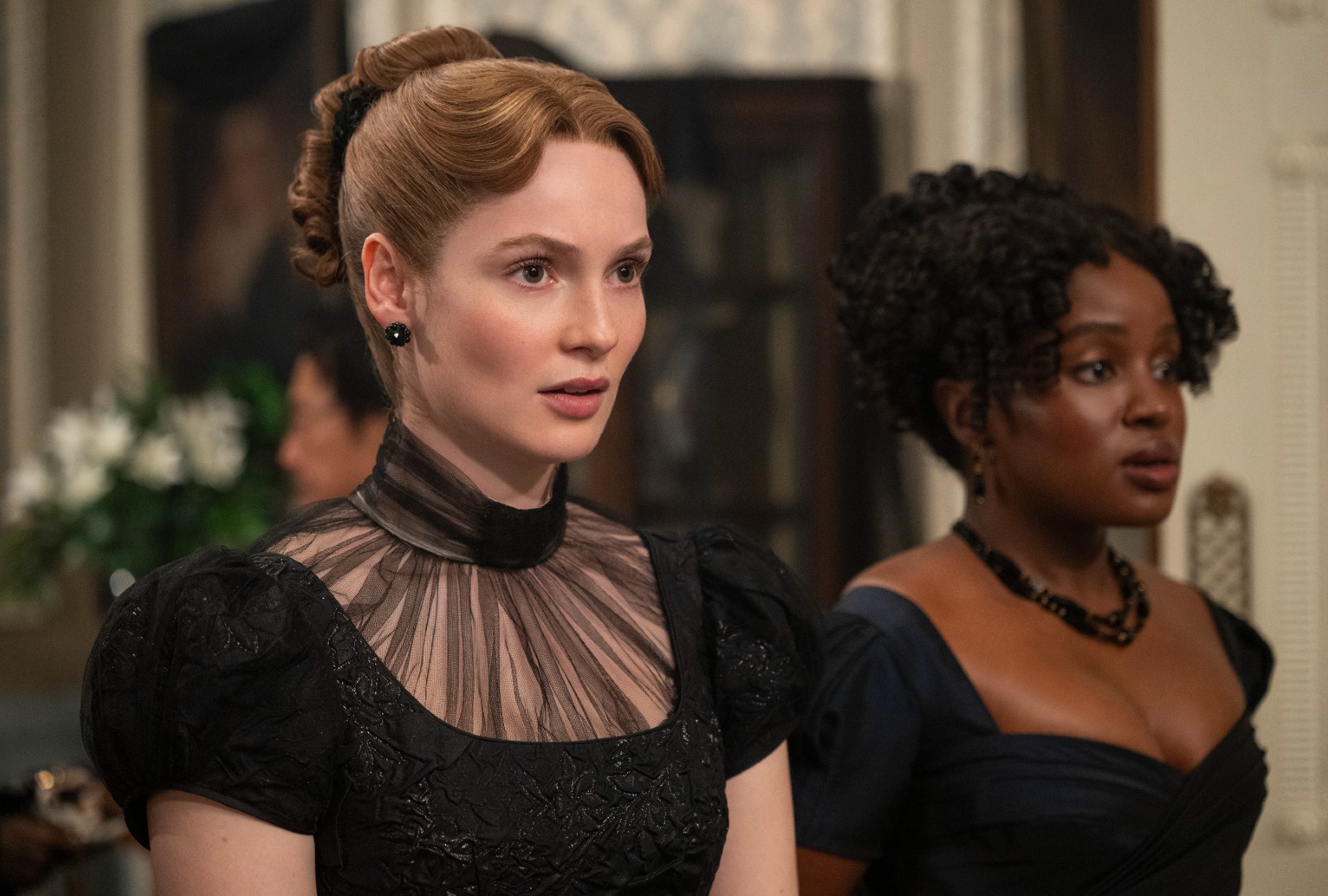
(Liam Daniel/Netflix) Hannah Dodd as Francesca Bridgerton and Masali Baduza as Michaela in “Bridgerton”
Each version of rhapsodized eroticism is grounded in a concept of relationship safety. For all the fuss over Shane and Ilya’s muscular encounters, no aspect of them occurs without one asking the other if what is transpiring also feels OK. Meanwhile, the entirety of Benedict’s relationship foreplay, like everyone else’s, is verbalized. This is also why the friendship budding between the typically flummoxed Francesca and the freewheeling, adventurous Michaela late in the season is as pleasurable to witness as it is crucial to foreshadowing the writers’ plans for those two.
How they come to love each other almost certainly won’t resemble anything we see on “Heated Rivalry.” But both stories woo us with worlds free of weaponized heteronormativity and the very real sensation of imperilment many of us are feeling. That these romances represent consideration as the ultimate seduction makes them not merely release valves, but emotionally liberating escapes. As Sophie says to Benedict in the wake of his radical openness, “Love is always a thing to be proud of. The world needs more of it.” So does TV.
“Bridgerton” streams on Netflix. “Heated Rivalry” streams on HBO Max.
Read more
about this topic