


When I told my 17-year-old son to set aside a couple of hours for us to watch Louis Theroux‘s new Netflix documentary, I got pretty much exactly the huffy, eye-rolling irritation I expected. Which is fair: I wasn’t exactly thrilled about watching “Inside the Manosphere,” either. As a mother, I’ve tried to be as diligent as possible about keeping up with my kid’s viewing habits; as someone who writes about gender, media, and pop culture, I’m already too familiar with the online spaces where mostly, but not exclusively white men have gathered over the years to commiserate with and convince one another that nobody gets a rawer deal than men, and to blame their loneliness and disconnection on women.
These guys, my son explains, can do what they do because their followers understand them as alphas, but they generally aren’t alpha enough to not worry about whether they look sufficiently alpha.
Theroux’s career as a documentarian has seen him embedding with a number of controversial individuals and subcultures in BBC series like “Weird Weekends.” His mild, watchful interview style and high tolerance for awkwardness is, on one hand, perfect for manosphere dwellers, who don’t need too much rope to start hanging themselves. But it’s also not clear how familiar Theroux is with the tangle of misogynists, chauvinists, trolls, pick-up artists, grievance peddlers, religious fundamentalists, incels, rape apologists, Gamergaters, looksmaxxers, snake-oil salesmen and Men Going Their Own Way that populate the manosphere. And without knowing what he wants to know about them, “Inside the Manosphere” unfolds without a real sense of purpose.
The unifying emblem of the manosphere is the red pill, the choice to see the real truth that’s been hidden from men by feminists and various progressive social movements that have robbed men of the power, deference and freedom to be masculine that is their birthright. “Inside the Manosphere” hints that while the red pill has has staying power, it’s lost some gravitas; among Theroux’s interviewees, it’s more compulsory buzzword than secret handshake. If an earlier version of the manosphere was assembled from the grievances of men who felt neither understood nor valued, the updated one is about being visible as a peddler of enviable masculinity.
(Netflix) Louis Theroux and Harrison Sullivan (HS Tikky Tokky) in “Inside the Manosphere”
Or, as my kid puts it, “These guys make their money scamming people.”
You barely have to look at the documentary’s vibrant stars — among them a sculpted, square-jawed Brit named Harrison Sullivan (who goes by the handle HSTikkyTokky); his protegé, a fellow Brit named Ed Matthews with Aryan, boy-band good looks; and Justin Waller, a tight-suited entrepreneur who looks like a mashup of John Cena and Channing Tatum minus the charm and self-awareness, to see how the manosphere has changed. In the sh*tposting, resentfully tribal manosphere of yesteryear, all three would have been considered interloping Chads flaunting their bone structure and ability to pull women. Their manosphere is located in the attention economy, always on and always hyped. And its denizens aren’t philosophers or bomb-throwers. They’re salesmen.
My son pauses the documentary after Sullivan, apparently forgetting that he’s not on his own livestream, starts narrating to the camera before Theroux cuts in with a bemused, “What are you doing?” Sullivan chuckles for a sheepish moment: “I’m sorry, I’m so used to social media,” he tells Theroux. “If this was being livestreamed, he probably wouldn’t have said that,” my son explained. “That was a genuine reaction he had. I don’t think that would have happened if he were on a livestream, because he wouldn’t want to show his belly.”
Want more from culture than just the latest trend? The Swell highlights art made to last.Sign up here
These guys, he goes on, can do what they do because their followers (in Sullivan’s case, a few hundred thousand on each of a variety of platforms including YouTube, TikTok and Kick) understand them as alphas, but they generally aren’t alpha enough to not worry about whether they look sufficiently alpha. “People like him act like a completely different person when they’re streaming. He knows he’s being filmed here, but his whole fan base isn’t actively looking at him while it’s happening. So he’s acting like somewhat of a normal person.”
The manosphere Theroux presents is a performance of capitalism, its main players the human embodiment of more than a decade of fragile-masculinity marketing that’s been successful as much because consumers are in on the joke as because they aren’t.
This isn’t the case with another of Theroux’s subjects, Myron Gaines, a 36-year-old Sudanese American blogger and podcaster whose media empire, Fresh & Fit, sounds more like a chain of cold-pressed juice bars. His proud misogyny makes Gaines the most Andrew Tate–coded of Theroux’s interviewees, but my kid explains that this isn’t the flex it might have been 4 or 5 years ago. “This guy has no credibility in the manosphere, or whatever it’s called,” he says. “He’s known to be a loser.”
Gaines presents as incredibly confident, but gets notably less so in Theroux’s presence; he shuts down a conversation between the filmmaker and one of his producers, and speaks for his much younger girlfriend, Angie, every time Theroux queries her about their relationship. “He’s one of those people who thinks he’s so much smarter than he actually is,” my son says. “Like that, there,” he emphasizes when Theroux asks Gaines — a proponent of “one-sided monogamy” — how many women besides Angie are in his rotation. “I do want to get multiple wives, but right now, I’m just focusing on building things up,” he says vaguely; the guy might be hustling, but he’s definitely not pulling.

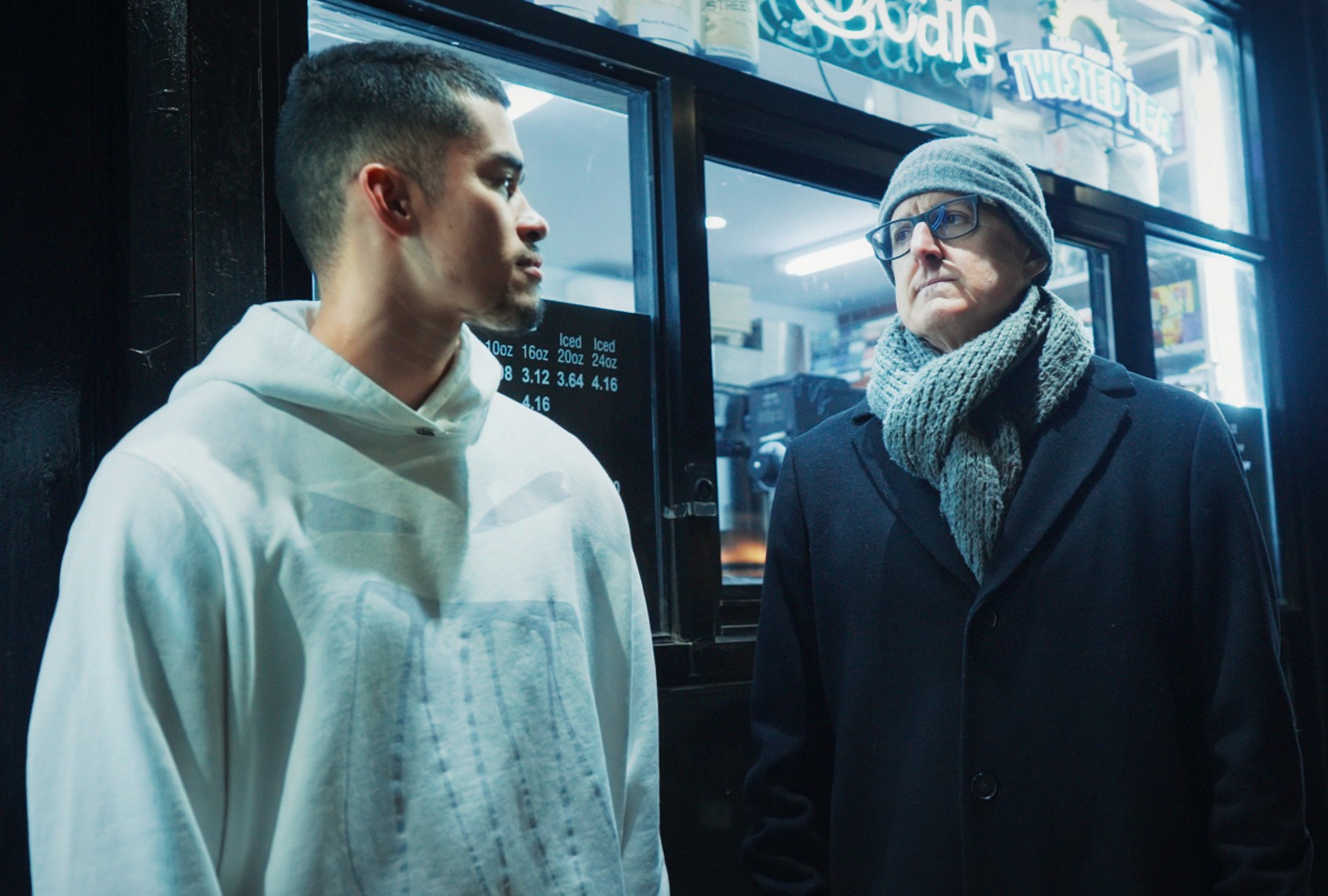
(Netflix) Nico Balinthazy (Sneako) and Louis Theroux in “Inside the Manosphere”
The manosphere Theroux presents is a performance of capitalism, its main players the human embodiment of fragile-masculinity marketing that’s been successful as much because consumers are in on the joke as because they aren’t — an echo chamber of Dude Wipes, brogurt and Liquid Death. His interviewees keep women around, but are primarily concerned with how they look to other men. The performance they are selling to the young men who buy their subscription packages is high-roller cosplay: sharp suits, expensive watches, granular breakdowns of gym routines and supplement cocktails.
It’s an update of early-2000s pickup-artist culture, which popularized terminology like negging and peacocking, and made clear that gamification of the process was the point: PUAs wanted women to know that they were being psychologically manipulated and be unable to resist anyway. The current manosphere barely puts any effort into peacocking for women because they aren’t selling to them. My son keeps returning to one of the clips from early in the documentary, of HSTikkyTokky asking the woman earlier identified as his dishwasher what she finds. “And she said ‘your money’ — he wanted to show all his followers that.”
Watching “Inside the Manosphere” is a reminder that the lives of teens like mine are divided sharply by the before and the after of COVID. Because the influencers in Theroux’s film are so social, so constantly bragging about and big-upping themselves, I’m momentarily confused when my kid locates its origin in pandemic-era lockdowns. “People were just alone on their phones for too long, and weren’t talking enough to, like, a variety of people. It created little bubbles. I truly think if people weren’t sat inside their houses for a year with nothing but the internet and their minds to entertain themselves, none of this would have happened.”
Having lived through the first era of the manosphere, whose spates of incel violence unfolded very publicly on college campuses and group-fitness classes, my instinct is to oh-you-sweet-summer-child this assertion. But he’s referring to something that’s different, if almost as chilling: The suspicion that on a mental and interpersonal level, a lot of young people just never fully left lockdown. Theroux’s apparent disinterest in connecting dots like these makes “Inside the Manosphere,” as it wears on, feel more and more late to the party; and his own bemused detachment like a disinterest in digging deeper.
Watching “Inside the Manosphere” is a reminder that the lives of teens like mine are divided sharply by the before and the after of COVID.
He’s happy to point out some of the influencers’ glaring contradictions — for instance, how many of them claim to be disgusted by women with OnlyFans accounts, even as they are a sizable part of their profit structures. But this comes across less as pushback than as petty needling.
As with the Netflix miniseries “Adolescenc” (2025’s winner for Achievement in Parental Anxiety), “Inside the Manosphere” is framed in terms of its impact on preadolescent and adolescent boys who watch these streamers. Theroux makes no effort to contextualize his subjects’ beliefs as more intense flavor of the misogyny and gender imperatives that have always been existed in the normative transition between childhood and adulthood. What he’s showing us is regular old patriarchy after it’s pounded a ton of energy drinks, injected itself with peptides and attempted to trigger us with inflammatory bits of evolutionary psychology; explicitly saying so might have eased some of the worries of parents and other invested adults; more important, it would have underscored that these young men are a new models in an age-old system.

(Netflix) Justin Waller in “Inside the Manosphere”
It’s easy to see why the manosphere is so concerning, but I also worry that taking it at face value — assuming that every boy who watches the streams of Sneako and HSTikkyTokky wants to emulate them — doesn’t give boys very much credit. I’m rattled by the fact that my son is at least passingly familiar with the influencers profiled in “Inside the Manosphere,” but I can also see what he means when he says they’re entertainment, not instructional videos. “It’s one of the biggest stereotypes there is: the big buff dude is a misogynist,” my son explains. “Whether they’re serious or they’re doing it as a bit or a full act, it’s funny no matter what.”
He also can’t think of anyone he knows who takes manosphere content seriously (“not even my stupidest friends”), and wonders out loud whether its rhetoric might be bigger threat to demoralized 20 and 30-something men than to impressionable youngsters. Some of the film’s most affecting insights come from two postadolescent men, acolytes of Waller’s who cling fervently to even his broadest, least nuanced pronouncements. But it feels like Theroux squanders a chance to ask what happens when the transformation promised by the products and programs they’re told will change their lives don’t.
“He could have asked better questions, but [the film] did show how these guys operate,” is my son’s verdict on the film. “Like, a lot of dumb people still don’t know that all that sh*t is a scam. [Theroux] didn’t outright say it’s a scam, but he showed everything that proved it. So I think that was good. [And] him finding those two other guys and sticking with them — it was good to get insight on their mindset. I remember the one guy said he just really wants to get rich for his brother who died. And, like, motivation is really important, but he doesn’t have a plan. And you don’t get rich by listening to a famous person tell you how to get rich. That’s how you make them rich.”
Read more
about material culture