


Just after the clock struck noon on a warm August morning in 2012, Cher took to her phone to send a tweet that would forever change the way I think. She couldn’t have known she’d alter my vernacular forever, but when Cher posted, “Whats going on with mycareer” — typos and all — nothing would ever be the same. For nearly 14 years, I’ve returned to this contemplative missive through every bump in the occupational road or moment of professional strife. “Whats going on with mycareer” has also extended beyond my personal purview and into my consideration of other people’s careers, too. And last summer, I found myself thinking about this tweet once more, watching Rose Byrne’s new film “Tow,” during its premiere at the Tribeca Film Festival.
The film is not about a tugboat operator, nor does it follow the life and times of the ramshackle group working at a service garage. “Tow” charts the intrepid journey of Amanda Ogle (Byrne), a woman living out of her Toyota Camry and trying to jump-start a life gone askew. Just as things start looking up, Amanda’s car is stolen, left in an illegal spot and towed, and the towing company slaps her with an exorbitant $21,000 bill for circumstances entirely out of her control. The system is stacked against Amanda, but with the faith of a rag-tag group at a local women’s shelter and the work of a novice pro bono lawyer, she launches a campaign to get her car back and, in turn, get back on her feet.
(Roadside Attractions) Rose Byrne in “Tow”
“Tow” is a testament to following your favorite performers to the ends of the Earth, just to see what absurd things they may do next.
“Tow” is a Cher tweet moment for nearly everyone involved, and that’s a lot of people — I’d wager even more familiar names than you’re expecting. Besides Byrne, the film boasts supporting turns from Octavia Spencer, Demi Lovato, Ariana DeBose, Dominic Sessa, Simon Rex and Elsie Fisher. That’s a stacked cast, with two Oscar winners in Spencer and DeBose, and one Oscar nominee in Byrne, who was nominated this year for her remarkable work in “If I Had Legs I’d Kick You.” The film itself, however, doesn’t come close to matching the caliber of its talent, who frequently fail to elevate the movie’s treacly after-school-special script. Byrne, on the other hand, gives a worthy performance that saves “Tow” from its own pedantic trappings and functions as a similarly fed-up complement to her character in “If I Had Legs I’d Kick You.”
Want more from culture than just the latest trend? The Swell highlights art made to last.Sign up here
It’s no mistake that “Tow” was released just five days after the Oscars, when the film can still capitalize on awards season’s waning buzz without negatively influencing Academy voting. While Byrne didn’t pull off a deserved underdog win last week, an Oscar nomination — alongside her Golden Globe win in January — carries a certain cachet regardless. (At the very least, it buys an opening day post from Gen Z’s favorite news source, Pop Crave, that’s currently sitting at 306,000 views and counting.) Byrne’s well-earned accolades allow “Tow” to fare better than it otherwise would have, while also causing “Tow” to horseshoe back to its starting point as an overall puzzling career choice. But a little bit of bewilderment can be a very good thing. “Tow” is a reminder that small films often contain big performances, and that acting is an art that shouldn’t be dismissed simply because a movie isn’t entirely worthy of its star. Moreover, it’s a testament to following your favorite performers to the ends of the Earth, just to see what absurd things they may do next.
There is plenty of ludicrousness in “Tow” to love and deride alike. Often, they’re the same thing, like Byrne’s stiff blonde wig or her set of fake teeth that impede several lines of dialogue to hysterical results. There’s something innately charming about Byrne uttering the words “science fiction,” with her tongue pressed so firmly to the back of her false chompers that she sounds more like Eugene Levy’s character in “A Mighty Wind” than any human who has ever lived. Byrne has always had a knack for marrying camp with earnest determination, as though she’s keenly aware of how often the two intersect in everyday life. If you’ve ever caught yourself in the middle of a breakdown, looked at the situation from a bird’s eye view and laughed at how comical yet deadly your circumstances can feel at the same time, you understand exactly how Byrne approaches her character work.
“Tow” is based on the real-life story of Amanda Ogle’s experience fighting her extortionate towing bill after her Camry was stolen, spending more than a year making what the bureaucrats in control of her situation assumed would be a little problem into a very big deal. First detailed in The Seattle Times in 2018, the ordeal made for a story that could speak to every reader. Who hasn’t experienced the frustration of having to speak up and make themselves heard in a world where corporate entities deprioritize human beings? Flight trouble, insurance copays, even trying to return a defective item; there’s nothing quite so dehumanizing as waiting on hold for hours just to beg for a little bit of compassion that should come far easier than it ever does. Institutions assume that customers will give up, that they’ll eat the charges, forget about it, or move on entirely. But surrender is a slippery slope. And for all its heavy-handed writing and mystifying character flourishes, “Tow” manages to be mostly an effective, if silly, story of perseverance, thanks almost entirely to Byrne’s dogged performance.

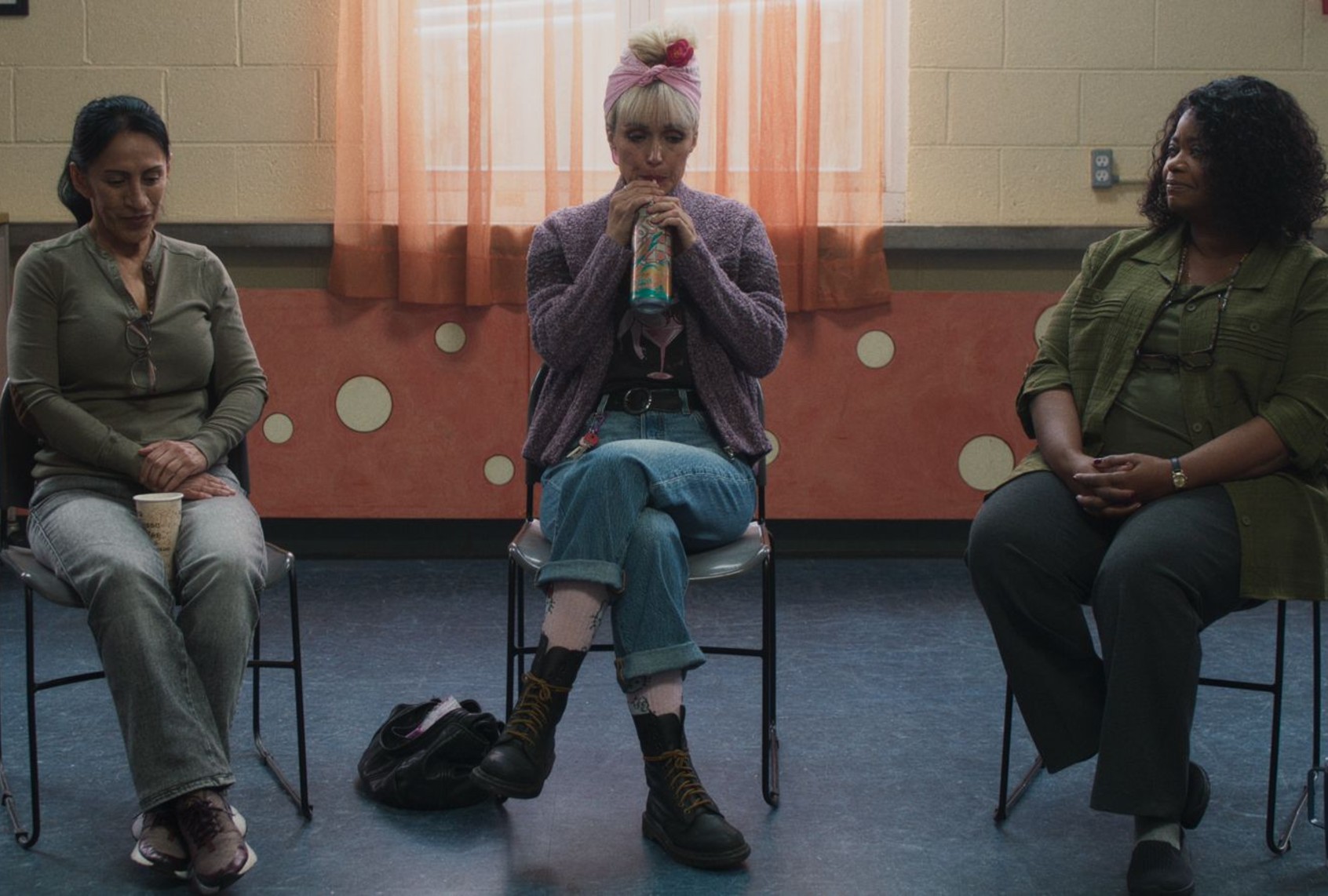
(Roadside Attractions) Rose Byrne and Octavia Spencer in “Tow”
It’s almost funny how thematically similar yet ultimately disparate “Tow” is to “If I Had Legs I’d Kick You.” In both films, Byrne plays a down-on-her-luck mother trying to make the best of an impossible predicament, rallying against systemic failure while fighting to keep her head above water. But in terms of their overall quality, the two films couldn’t be more divergent. These two movies’ lifecycles overlapping is a rare coincidence, but not entirely unheard of. In entertainment circles, the Oscar curse is a dreaded phenomenon, characterized by actors who have been nominated or won an Oscar, only for their post-prestige careers to be fraught with flops. This is an uncharitable way of looking at art, a method of engaging with film that defeats cinema’s purpose, which is not to make the viewer think about how a movie measures up to an actor’s last hit. Still, the post-Oscar slump exists nonetheless, fueled by a world that enjoys building people up before laughing at their downfall.
Even some of the worst films I’ve ever seen have merit, buried beneath the rubble of their awfulness. But collective opinion is formed in a vacuum and spit out as gospel, and that’s not a fair way to approach movies.
“Tow” might not be a knockout, but it’s far from the dregs of cinema. And even if Byrne won’t be appearing in any clickbait lists of actors whose careers went south anytime soon, an Oscar-worthy performance and a strange indie melodrama being released in such close succession make for an absorbing study in how we view and think about cinema. When it comes to art, the phrase “consume” stands in too often for “engage with” or “consider.” That “consume” has become the go-to descriptor for how we interact with films points to a larger denigration of the medium itself. What could we learn if we thought about movies outside of a straight stream of consumption, and what are we missing by relegating movie-watching to such an automatic process? The tie that binds the Oscar curse and our assumptions of what the roles an actor chooses after their first Oscar nomination should look like is much shorter than it may initially seem.
Take Halle Berry, one of the more famous examples of the post-Oscar slump, winning best actress in 2001 for “Monster’s Ball” before starring in the critically reviled bomb that was 2004’s standalone “Catwoman” film. While I could wax poetic on the virtues of “Catwoman” for another 5,000 words, I won’t subject you to that here. What I will say is that the glow of Oscar prestige made a deceptively well-written, visually captivating and totally singular film look more inferior than it actually is — and our culture is worse off for it. Even some of the worst films I’ve ever seen have merit, buried beneath the rubble of their awfulness. But collective opinion is formed in a vacuum and spit out as gospel, and that’s not a fair way to approach movies.
Then there’s Nicole Kidman, who was nominated for an Oscar for the grief drama “Rabbit Hole” just three weeks before she appeared in Jennifer Aniston and Adam Sandler’s rom-com, “Just Go with It.” Kidman is a prime example of an actor who does one for them (something fluffier and more accessible to the general public) and one for her (a project that demands intense character work), ensuring both a steady stream of work and the chance to play around with all types of roles. That diversity is part of what makes Kidman such an interesting artist. And if her goofier choices were unanimously refuted as artistic inferiority, we’d never get the chance to see her bounce from “Babygirl” to “Holland” to playing an Italian forensic pathologist in “Scarpetta.” Only one of those projects is genuinely good, but there has to be room for the bad, too.
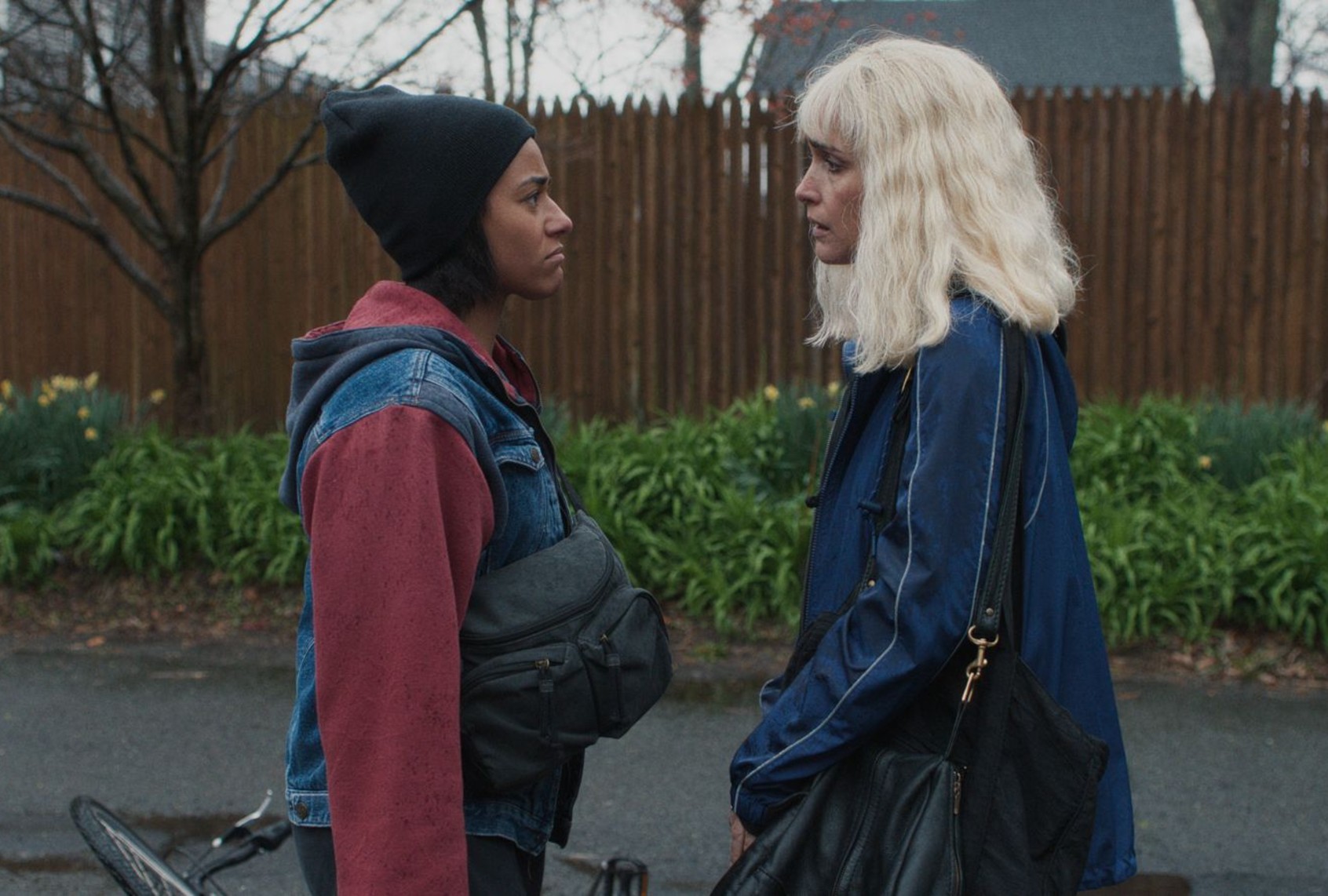
(Roadside Attractions) Rose Byrne and Ariana DeBose in “Tow”
It’s cool that Eddie Redmayne campaigned for “The Danish Girl” while also promoting his gravel-voiced alien emperor in the wacky “Jupiter Ascending,” and extremely rad that Sandra Bullock won a Razzie for “All About Steve” the night before she won an Oscar for “The Blind Side.” I can tell you which of those movies I’d rather watch again, and it’s not the one where she plays a white savior mother with an addiction to hairspray.
While I may have been quick to chalk “Tow” up to a “Whats going on with mycareer” moment for Byrne, I had faith that whatever came after wouldn’t disappoint. This is the woman who followed up “Peter Rabbit” by playing Gloria Steinem in “Mrs. America.” Counting her out — or anyone else who has a weird semi-flop on deck after a great film — would be a mistake. The great thing about Cher’s tweet is that it doesn’t end with a question mark. It’s not a query; it’s a statement. Here’s what’s going on with my career. Take it, leave it, or love it. Maybe I’m reading too much into it, but as history’s proven, taking the time to look a bit deeper at totally benign, silly things can be a blast.
Read more
about Rose Byrne’s unexpected choices