

In early 2025, the UK tabloid Daily Mail ran 17 stories in a 4-day period about the demise of 47-year-old American writer-director-producer Jeff Baena, who died by suicide in January of that year. Baena’s career in Hollywood began when he co-wrote the script for David O. Russell’s pitch-black comedy “I Heart Huckabees,” and went on to write and direct a handful of well-received indie films like “Life After Beth,” “The Little Hours” and “Horse Girl.” But he wasn’t the kind of marquee name that usually inspires breathless round-the-clock coverage from Daily Mail — and in a way, that itself was the story. Baena ended up playing a supporting role in the tabloid coverage of his own death because the outlet had quickly cast the more important role of the villain: his wife, actor Aubrey Plaza.
A culture that’s achieved some level of gender parity doesn’t have the same preoccupation with the black-widow archetype it once did — but that doesn’t mean the archetype itself has faded.
Once it became clear that Plaza and Baena had separated several months before, and were living on opposite sides of the country at the time of his death, the headlines grew increasingly freighted with subtext. “Jeff Baena’s shock split from Aubrey Plaza revealed as chilling new details of his death emerge,” “Inside Aubrey Plaza and husband Jeff Baena’s private 14-year relationship amid his shock death at age 47” and “Aubrey Plaza and Jeff Baena were last seen together on a hike last summer in rare public sighting before his suicide” were among the lurid headlines that appeared determined to suggest that readers should almost certainly be alarmed by each new detail of the story.
(David Crotty/Patrick McMullan via Getty Images) Jeff Baena and Aubrey Plaza, 2016
Daily Mail wasn’t alone in this endeavor. The New York Post’s Page Six published a photo of Plaza at a Knicks game with comedian Jerrod Carmichael with the headline “Aubrey Plaza was spotted smiling and enjoying a Knicks game 2 days before husband Jeff Baena’s death”; TMZ, not to be out-sensationalized, shouted in all-caps that Plaza had been spotted “STROLLING WITH PRODUCER PAL After Late Husband’s Passing.” There was an air of the sinister in the tortured syntax of these headlines: Plaza was suddenly positioned as suspect. Her body language was scrutinized, her every comment treated as a potential chance for her to incriminate herself.
It reminded me of something, but I didn’t remember what until later in 2025, when young widows were once again in the news. Erika Kirk enjoyed a scant few days of solicitous respect after her husband Charlie was assassinated, before public opinion shifted and she morphed into a homewrecking hussy who was probably responsible for his death. Shortly after that came the news that Courtney Love, the most famous and most reviled widow of my Gen-X lifetime, is the subject of an upcoming documentary that will almost certainly reanimate the rumor that she, too, was behind her husband’s death. A culture that’s achieved some level of gender parity doesn’t have the same preoccupation with the black-widow archetype it once did — but that doesn’t mean the archetype itself has faded.
It wasn’t surprising, then, that last week’s announcement that Plaza is expecting a baby with current partner Christopher Abbott has been received with a fresh round of trust-no-widow anger. There’s a new spate of headlines, of course, a few of which willfully suggest that Plaza has been pregnant for more than a year with her deceased ex-husband’s child (“Star debuts baby bump after husband’s death”), another small handful of which are game to at least try being normal about the announcement (“Aubrey Plaza is expecting her first child with ‘Girls’ star Christopher Abbott”), and several that are small marvels of unhinged word salad. (Hats off to Daily Mail’s “How Aubrey Plaza found happiness again with partner Christopher Abbott after being left paralysed by a stroke and struggling daily with her husband’s suicide — as it’s revealed she’s expecting first child a year after his death.”) But more notable are the number of people opining from various social-media channels that this is actually not a blessed event but a huge mistake made by a Bad Widow.
Whether or not we should all know less about each other, I think it’s a good idea to always assume we know much, much less than we think we do.
Take the X user who reposted PopCrave’s news item with the comment, “Her husband killed himself like a year ago btw.” It was reposted thousands of times, as was one that angrily (and incorrectly) accused Plaza of “not even [waiting] 6 months” before getting a new partner and getting pregnant by him. Consider, also, the assessment of a random comment on Entertainment Tonight’s Instagram post: “I think going from 10 year partnership/marriage to separated in Sept. of 2024 to partner dies in early 2025 to pregnant with new man in early 2026 is a crazy order of events — either some cheating happened/overlap or she has not grieved through what has fallen apart and is just distracting herself . . . A year is not enough time to grieve and work through a separation, death, new relationship and pregnancy — obviously.”
Obviously.
Want more from culture than just the latest trend? The Swell highlights art made to last.Sign up here
“She should’ve at least waited a few years.” “Wow, she moved on fast.” “Well, I guess we know why her husband did it.” The levels of parasocial weirdness and hostility around the announcement must, I assumed, have had something to do with Plaza’s reputation as a beloved oddball, which dates back to her breakout role as “Parks and Recreation”’s April: Perhaps her once-niche celebrity had made longtime fans confident about having a deep, unique insight into what’s best for her. But then I thought about the bizarre distrust aimed at her after Baena’s death, and about the hostility to women whose partners die young, and tragically — not just famous women like Courtney Love and Ariana Grande, but women whose names we only know because people hold them responsible for someone else’s death — and, for that matter, about the women whose partners die from other sudden, awful causes and who are also scrutinized for signs of presumptive guilt.
Like Kobe Bryant’s widow, Vanessa, who was recently rumored to be pregnant (she wasn’t, but the actual, factual truth wasn’t a necessary ingredient in the bog-standard misogyny and self-important sports punditry that grasped at the narrative) the fact that such a thing could happen was enough for plenty of people to condemn her, and to continue perpetuating the rumor. Or Kelly Rizzo, who lost her husband — comedian Bob Saget — in 2022 and subsequently had some pointed words for people who thought they had the right to decide when she could move on with her life. Or Erika Kirk, someone I’m not naturally inclined to defend but feel compelled to simply because nearly every move she’s made since her husband was killed has spawned batsh*t conspiracy theories that only make sense to people who need her to be a real-deal villain rather than just a tedious attention-economy villain. Or the widows in places like India, Tanzania, Ghana and Papua New Guinea who are stripped of land, ostracized by in-laws, and isolated in “witch camps.”
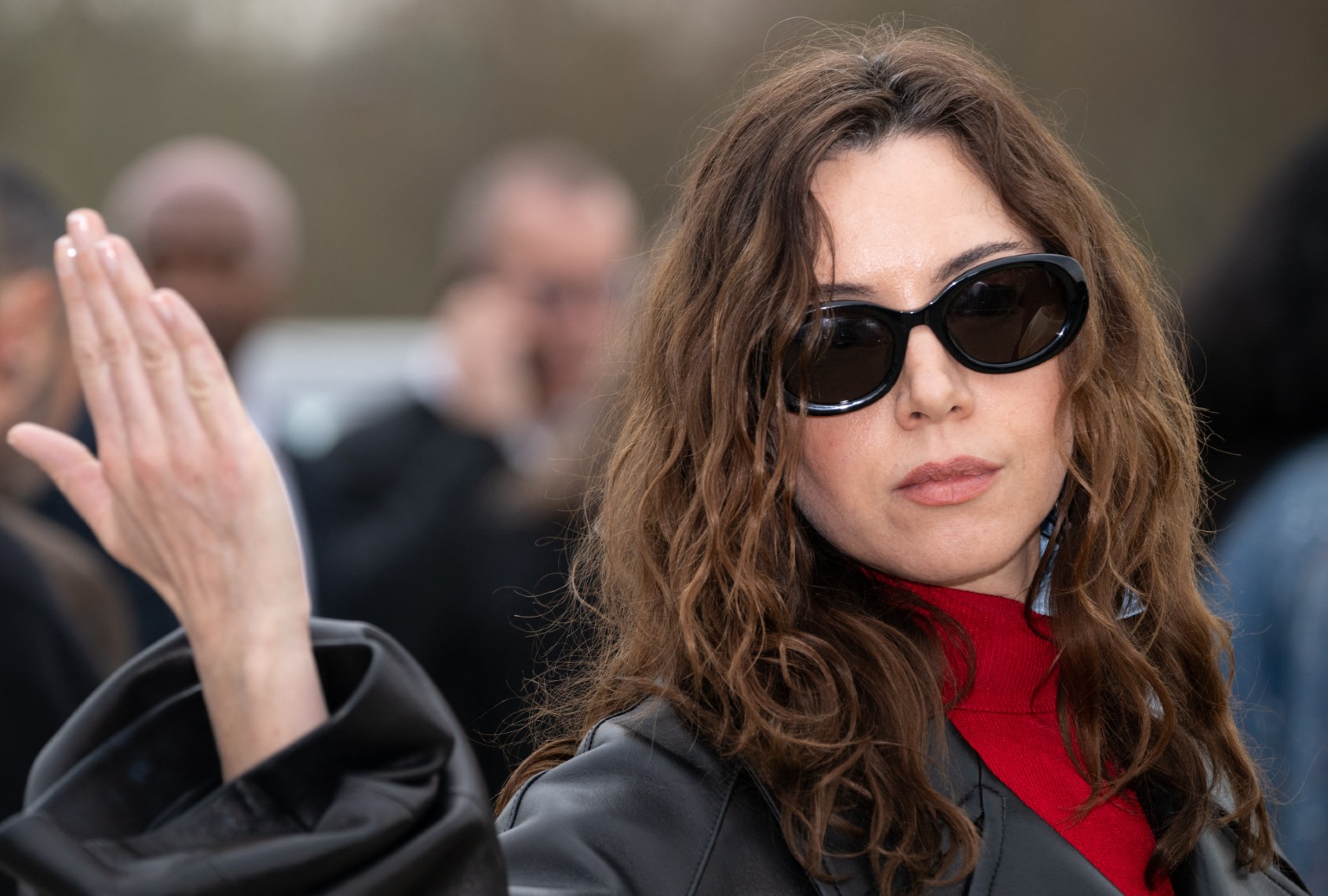
(Laurent Hou / Hans Lucas / AFP via Getty Images) Aubrey Plaza
As the child of a widow, I have some feelings about their marginalization: I spent a lot of my adolescence watching my mother, who had no intention of remarrying, field numerous inquiries about marriage from recently divorced or widowed men who were completely at sea without a woman to do their laundry, make their doctor’s appointments and schedule their social calendars. She continued to let well-meaning friends and acquaintances set her up with potential husbands for years because, despite resenting the idea that a single woman of a certain age was a problem to be solved, she was pretty sure that most of the efforts on her behalf were a result of their own anxieties about mortality. (She also didn’t believe in going to the movies alone.)
I generally agree with the latter-day internet’s conventional wisdom that we should all know less about each other, but it’s also pretty clear that the latter-day internet is structured around making it impossible not to know things about each other, even those we have no business knowing. (Just one example: After Jeff Baena’s brother inserted himself into this whole kerfuffle by posting, and then quickly deleting, a photo of Plaza and Abbott with captions including “Once a cheater always a cheater” and “instant karma,” I now know that Jeff Baena’s brother does not know what “instant karma” means and just based on that, might not be a particularly reliable source of information.) But whether or not we should all know less about each other, I think it’s a good idea to always assume we know much, much less than we think we do, especially about personal matters. And, when it comes to celebrities who we don’t know, to pay less attention to comments from others who don’t know them, and more attention to the more wholesome ones, like, “I’m happy for them,” and, “that baby is going to be gorgeous,” or, inevitably, “Who’s going to tell Marnie?”
Read more
about parasocial relationships


