


A few weeks back, I got a late-night text from a friend that read, “Please tell me you’re going to write about this,” and linked to an Instagram post about Olivia Rodrigo, who caused a social-media kerfuffle last month in Barcelona when she performed at a Spotify event wearing a gauzy, flowered babydoll dress and matching bloomers. To anyone familiar with Rodrigo’s heavily 1990s influences, the dress made immediate sense. To everyone else, it was pandering, tasteless “pedo bait.”
True, this particular moment in the United States of Donald Trump, Jeffrey Epstein, and Elon Musk probably isn’t the best time for fond callbacks to an era when a rock journalist could flippantly coin the term “Kinderwhore” to describe an interviewee’s aesthetic and not raise an eyebrow. But when Rodrigo was asked to respond to the controversy on The New York Times’ Popcast, she didn’t mince words, pointing out that she’s worn more revealing outfits on stage with less pushback. The outcry, she said, “shows how we just, like, really normalize pedophilia,” adding, “You shouldn’t be responsible for some guy sexualizing you when that was never your intention.”
The babydoll dress has a long and complex history, one that’s been associated with women’s sartorial freedom as much as it’s reified their cultural infantilization.
It was gratifying to hear the confidence in Rodrigo’s voice, along with the irritation of a young woman aware that she’s one outfit away from being deemed a bad role model despite never asking to be any role model. But equally important, Rodrigo contextualized the dress as a nod to the women of an earlier era who inspired her — and who, in their own time, wore similar frocks as a way to confront a pedophilic gaze that’s existed wherever girls have existed, for as long as they have.
Want more from culture than just the latest trend? The Swell highlights art made to last.Sign up here
The babydoll dress has a long and complex history, one that’s been associated with women’s sartorial freedom as much as it’s reified their cultural infantilization. The style had roots in the late 18th century, when France’s Directoire era represented a retreat from gaudy Rococo maximalism and an embrace of clean, froth-free lines. French designer Paul Poiret looked to this history in the early 20th century when he began designing chic, architecturally inspired gowns that required no corsets or petticoats. The babydoll itself debuted in the 1940s as a nightgown whose abbreviated length was the result of war-rationed fabric. Lingerie designer Sylvia Pedlar made the best of it, designing a flared silhouette that fell loosely from the shoulder and stopped just at the thigh.
That said, there’s no avoiding the seamy source of the garment’s name: The 1956 Elia Kazan film “Baby Doll,” in which a virginal 19-year-old woman whiles away the days until she turns 20 and consummates her marriage to an older man. (This involves sleeping, thumb in mouth, in an ornate crib — and yes, it’s a comedy.) The babydoll dress then bounced from this sordid scenario back into fashion innovation: Its silhouette inspired Cristobal Balenciaga’s unexpectedly chic evening take in the late 1950s; not long after, London mothers of Mod like Mary Quant and Biba streamlined the style for the Youthquakers.
Peak Babydoll arrived in the ’90s, when alternative culture broke through to the mainstream, a new feminist subculture called for “Revolution Girl-Style now,” and fashion magazines and mail-order retailers began speaking to teen girls in their own language. The short, kicky dresses that were everywhere in the early ’90s weren’t all one thing, though modern surveys of the time tend to invoke Riot Grrrl and call it a day even though scene icons like Bikini Kill and Huggy Bear favored Mod-ish dresses with a clean-lined primness, a stark contrast to the music’s raw, ragged fury.
And then there was Kinderwhore, the source of a still-contested alt-rock feud. Both Hole’s Courtney Love and Babes in Toyland’s Kat Bjelland claimed to be the first to perform in vintage, threadbare dresses with Peter Pan collars and puff sleeves, accessorized with knee socks and Mary Janes. Either way, the onetime roommates and bandmates pioneered a discomfiting broken-doll aesthetic of smudged eyeliner, smeared lipstick and plastic barrettes clipped to hanks of bleached-out hair.
(Ron Davis/Getty Images) Courtney Love
Pretty wasn’t the point: Kinderwhore’s power was that it stared down the normative fetishization of white innocence and refused to look away: You get off on little girls, sicko? Yeah? F*ck you. As her notoriety grew, Love used her massive platform to clear up any confusion: This was sexualized girlhood as grotesque, she asserted, citing the Bette Davis/Joan Crawford hagsploitation classic “Whatever Happened to Baby Jane?” as ironic inspiration.
The friend who texted me about Rodrigo’s babydoll dress wasn’t just making light conversation. Born into a nominally liberated time for women, our Gen X girlhood was a specific kind of confusing: Yes, we were weaned on “Free to Be You and Me.” Our Lego sets and footie pajamas were ungendered. Our right to play sports at school was enshrined. But we were constantly reminded that we were also just girls — girls who lacked the power, the vocabulary, and the adult supervision to understand that when we were objectified, we weren’t the ones at fault.
My friend and I were weedy tomboys who wore our brother’s hand-me-down corduroys and sweatshirts, swooned for “The Outsiders,” and snuck cigarettes into movie matinees when you could still smoke indoors. Though we got together only sporadically, it became clear that we were using clothing to hide in very similar ways. I had only one sartorial concern at the time: deflecting male attention whenever possible. It was a largely unconscious reaction to an inappropriate father who had a habit of looking me up and down wolfishly, commenting on my body and those of other women and girls in ways that made me want as many layers of clothing as possible between us. If it was less than two sizes too large, I wasn’t putting it on; if I wore a skirt, it was with jeans underneath it. My friend, who wore bulky sweaters year-round because she was always cold, was in the nascent stages of anorexia and bulimia. Neither of us knew what the other was dealing with until years later, when, as adults, we were able to laugh grimly over our late arrival to a world of clothes that actually fit.

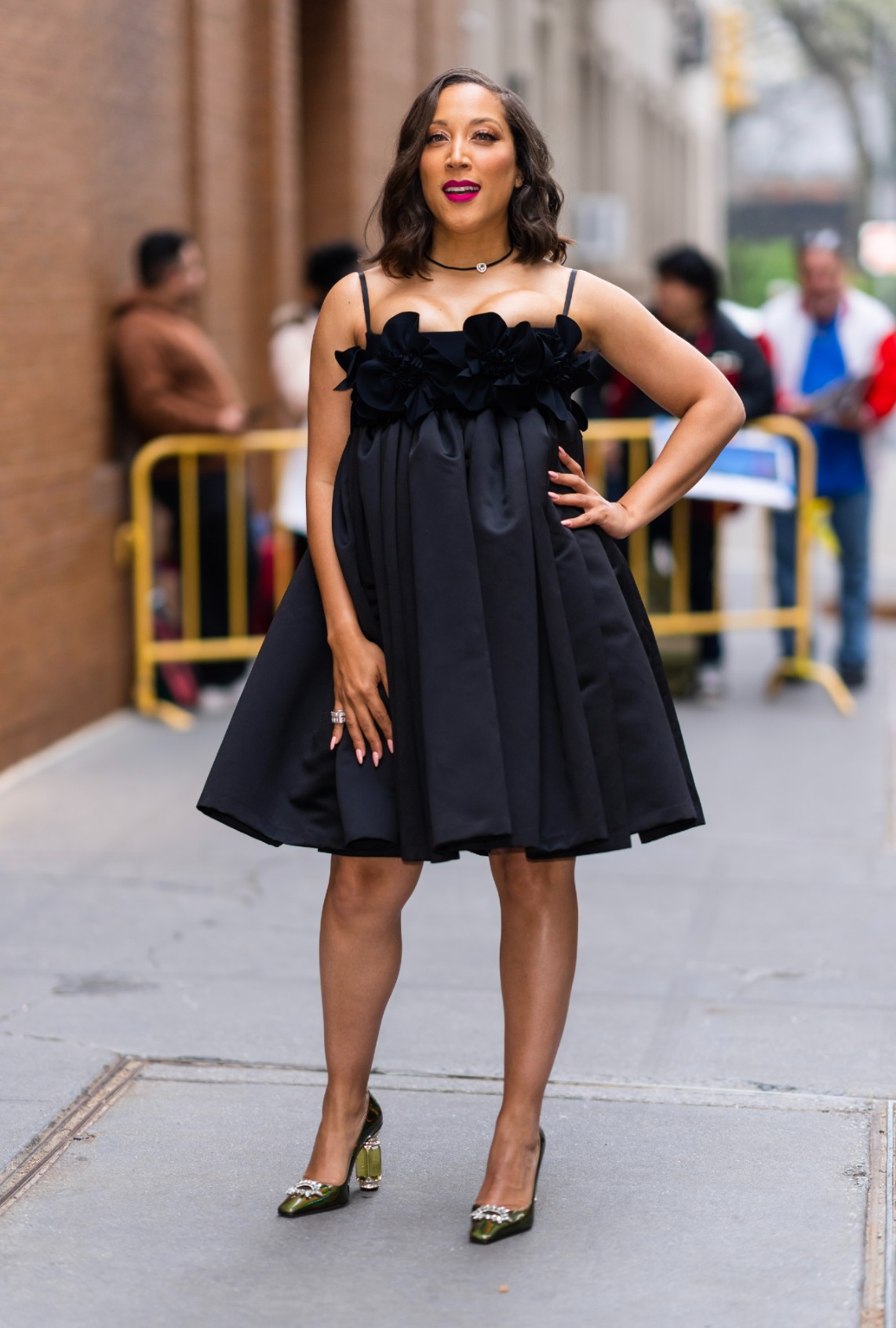
(Gotham/GC Images/Getty Images) Robin Thede
Secretly, though, I loved fashion. My chic, birdlike mother, at one time a department-store buyer, had a wall-sized closet whose mirrored doors slid back to reveal pieces that I would love to have now: Black suede jeans, Norma Kamali knits, wide-collared shirtdresses in wild prints. When I was 17, I started an internship at the now-revered magazine Sassy, where I hoped, also secretly, that I might glean some wardrobe intel from the staff of cool twentysomething women. It was there that I first saw a dress that made me rethink girl clothes: It was a short, sacklike rectangle of crinkly black material printed with ditsy flowers, and it made me pause: I could wear something like that.
I don’t want Rodrigo or anyone else to surrender the babydoll dress because a culture that’s never needed an excuse to objectify girls is concerned that it might objectify girls.
I pawed through the outer lands of my mother’s closet before asking if I could alter a navy trapeze-style dress she no longer wore. She was so thrilled by my interest that she would have handed over anything that fit, and I stayed up late hemming the dress by hand. When I wore it later that week to the Sassy office with a pair of men’s oxfords, one of the other interns — the coolest of cool girls, who went on to co-found a cult-favorite fashion label — took in the outfit, bestowing on it an affirming nod before adding a withering remark about my overgrown hair. It was a start.
This last category of ’90s babydoll dresses, the ones that hung on the racks at Express and Rampage and Merry-Go-Round, weren’t Mod, weren’t punk, and weren’t Kinderwhore. They accommodated a range of bodies, skimming over curves and covering cleavage. Their Empire waistlines were more like delineating seams that hit somewhere at the ribcage. The skirts were tiered or flared and, though they stopped a few inches above the knee, wearing black bike shorts was an acknowledged fail-safe, a Spandex barrier against air vents, strong winds, and creeps of all kinds.

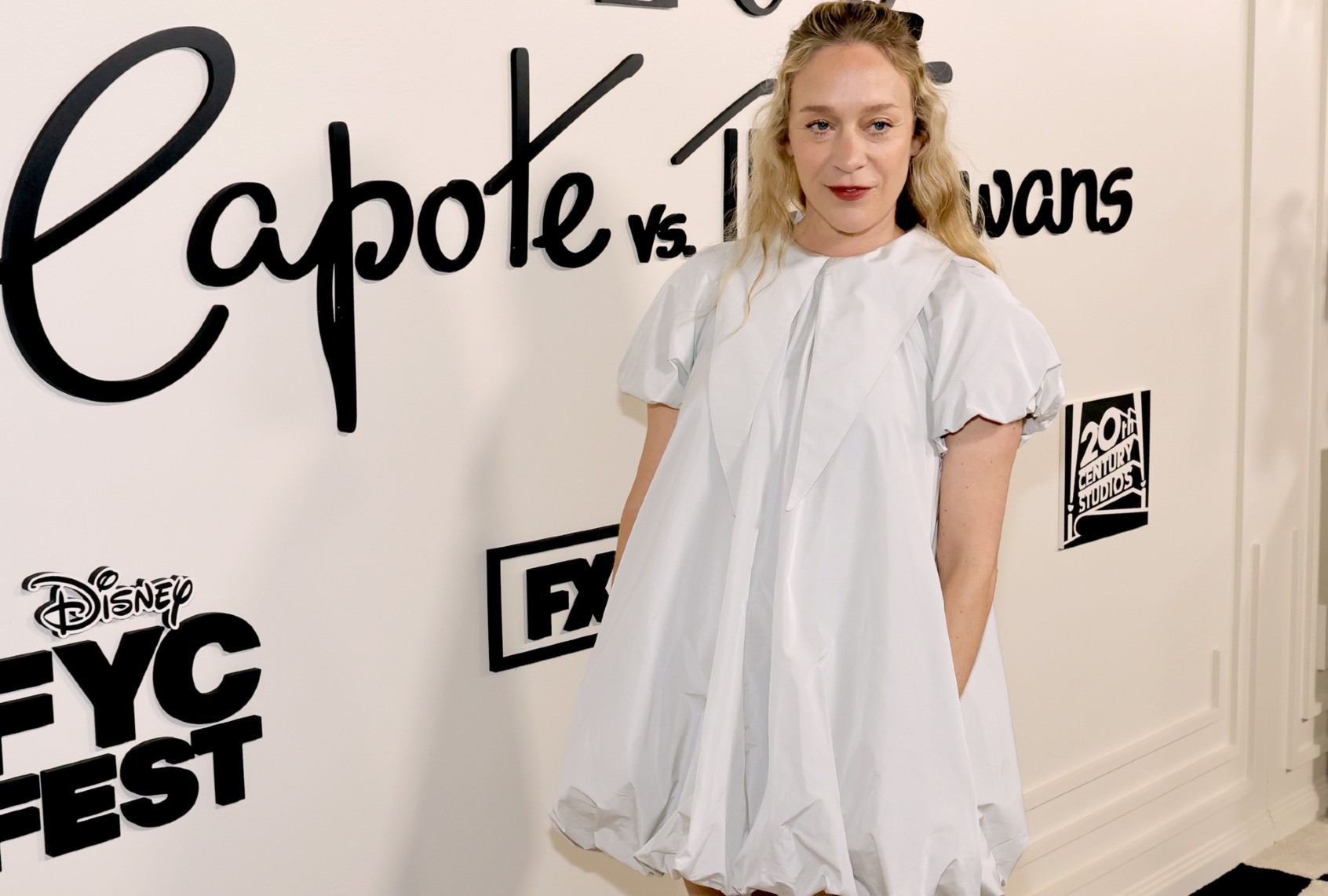
(Kevin Winter/GA/The Hollywood Reporter via Getty Images) Chloë Sevigny
I eventually bought a proper babydoll dress and styled it like countless other women on the streets of New York, topped with a denim jacket or mohair grandpa cardigan, with Doc Martens or motorcycle boots below. Toughening up the dress made it feel, to me, like armor: concealing more than it showed, feminine but not obviously sexy. It made me willing to be seen for the first time in years. There’s no garment powerful enough to keep a NYC catcaller from doing his thing, but in that dress, I strode to Sassy’s Times Square offices and my retail job on lower Broadway with something that approached confidence.
“To be cringe about it, the ’90s babydoll dress wasn’t designed for the male gaze,” says my friend Rachel, a keen observer of Gen X fashion then and now. A 1992 fashion spread in Sassy that featured Chloë Sevigny, scouted right off the street by an editor, captured its us-girls magic: In it, she’s wearing bright-red tights, John Fluevog lace-up boots, and a dress resembling a scaled-down circus tent. She’s gorgeous, of course — she’s Chloë Sevigny, and she knows it — but she’s wearing what she wants, rather than what others expect to see.
I rarely talk or write about my experience as a sexualized child, but the way it informed my feelings about fashion is why my friend knew, when she texted me, that I’d go to the symbolic mat for Olivia Rodrigo. I don’t want Rodrigo or anyone else to surrender the babydoll dress because a culture that’s never needed an excuse to objectify girls is concerned that it might objectify girls. Babydoll dresses are not the reason that the full-scale disempowerment of women and girls sits atop a checklist of government priorities. Babydoll dresses didn’t cause the suppression of the Epstein Files or deny justice to his victims. Babydoll dresses aren’t the reason that tech billionaires spend their time devising tools for the express purpose of violating the consent of girls and women on the internet. It may seem like a good time to wave bye-bye to the babydoll. Maybe it is — but I’d argue that it’s an even better time to refuse.
Read more
about women in music