


If you’re also a pop culture obsessive, it was probably around early 2025 when alarming photos of Ariana Grande began rolling up in your text messages and DMs; images of the star looking particularly gaunt, shoulder bones and clavicle protruding. With the recent release of her new music video for “Petal,” those messages intensified to establish a troubling refrain: “Is Ariana Grande OK?”
It’s hard to tell when, exactly, raising legitimate concern about a woman celebrity’s appearance became synonymous with your run-of-the-mill misogyny or bullying. But somewhere between the “you go, girl” and #MeToo eras emerged a dishonesty around how we discuss women’s bodies.
That was a total vibe shift from the tedious “extreme theater kid energy” discourse that popped up whenever Grande and her “Wicked” co-star, Cynthia Erivo, so much as breathed in the same room together throughout the film and its sequel’s exhausting two-year press tour. The new messages carry with them a deep sense of concern and bewilderment, because they come from people who are mere spectators with neither the medical degree, language, nor relationship with Grande to perform the appropriate wellness check. Still, what comes across is the sincere questioning of the health of celebrities like Grande and, more recently, Kaia Gerber and Jenna Ortega, both of whom have also raised alarm bells with their extremely thin bodies. Potentially, this questioning is a call for an intervention.
(Jeff Kravitz/FilmMagic/Getty Images) Jenna Ortega
Attempts to bring concern from intimate settings to social media are too often met with accusations from masses of strangers, some who even call themselves fans, of body shaming replete with suggestions that these women celebrities are just “petite” and other accompanying body positivity platitudes.
It’s hard to tell when, exactly, raising legitimate concern about a woman celebrity’s appearance became synonymous with your run-of-the-mill misogyny or bullying. But somewhere between the “you go, girl” and #MeToo eras emerged a dishonesty around how we discuss women’s bodies at a time when there’s been a frightening return of the ‘90s “heroin chic” look and amid an increasingly worrying dependence on GLP-1s. Consider it an overcorrection of hypercritical commentary that has historically targeted female stars throughout Hollywood history.
Even with constant access to information about medical breakthroughs, counseling on how to support or approach someone who may be experiencing a health crisis, people aren’t much more equipped to confront female body issues today, including their own, than in the ‘80s.
On one hand, the impulse to protect women in the public eye who have been especially vulnerable to criticism that too often ties their physical appearances to their success and, sometimes consequently, their self-worth is fair. On the other hand? The urge to deflect from difficult conversations, distorting concern for something ugly or otherwise pejorative, is misleading and unproductive.
That kind of response too often is more about proving a sense of standom than actual concern for a fave.

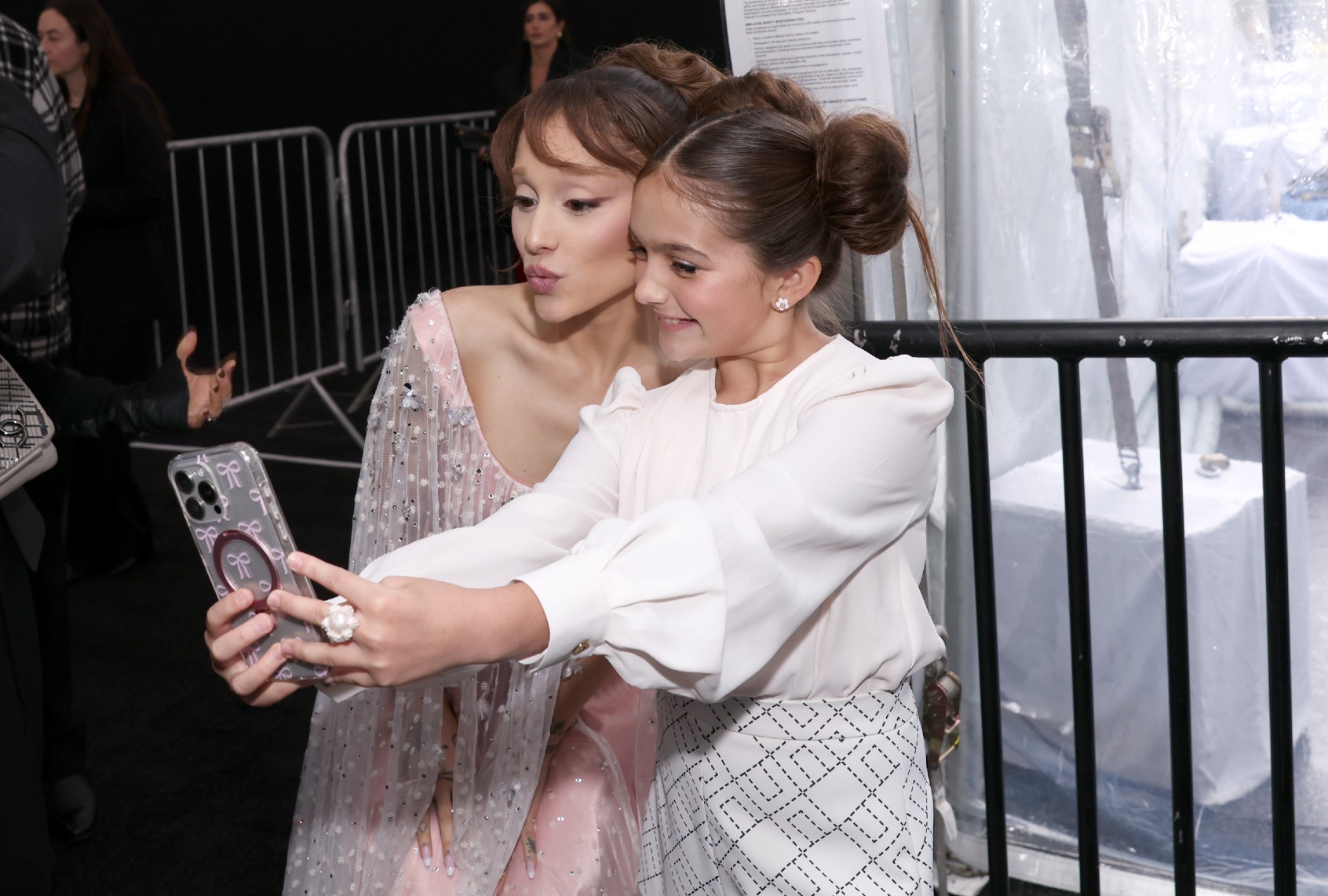
(Anna Webber/Getty Images for Cold Stone Creamery & Wetzel’s Pretzels) Ariana Grande and Taylen Biggs
Want more from culture than just the latest trend? The Swell highlights art made to last.Sign up here
The silence, and silencing, of what may or may not be a serious issue that these young celebrities are experiencing feels reminiscent of the kind of culture that women such as Karen Carpenter were immersed in several decades ago. The kind that shrouded The Carpenters’ silky-voiced singer’s emaciated appearance in a quiet shame until her death in 1983 at age 32.
At the height of her fame and success in 1981, Carpenter weighed about 80 pounds. Her fans, some “who knew something was terribly wrong but assumed she had cancer or some other disease,” were aghast at her appearance whenever she took the stage. Few people then, not even Carpenter’s closest confidantes, knew how to talk about what was actually an eating disorder, much less manage it. “If this had happened in today’s world, I think Karen would have lived,” Frenda Franklin, Carpenter’s friend, said in a 2010 interview with The Guardian. “I think we would have had a good shot. They know so much more. We were dancing in the dark.”
While Grande has not publicly confirmed either way, Gerber recently opened up about her own “disordered eating,” as reported by People, and a clip of Ortega has been circulating in which she looks back on her struggles as a child actor, saying, “I would go all day without eating, drinking, whatever, because I wanted so badly to not be in the way of anybody.”
The truth is even with constant access to information about medical breakthroughs, counseling on how to support or approach someone who may be experiencing a health crisis, people aren’t much more equipped to confront female body issues today, including their own, than in the ‘80s. It might actually be worse. Not only do people still struggle with how, if, and when to talk about it, but whether that concern is wrapped up in their own self-image in a social media era that too often normalizes untenable and outright unrealistic female bodies.
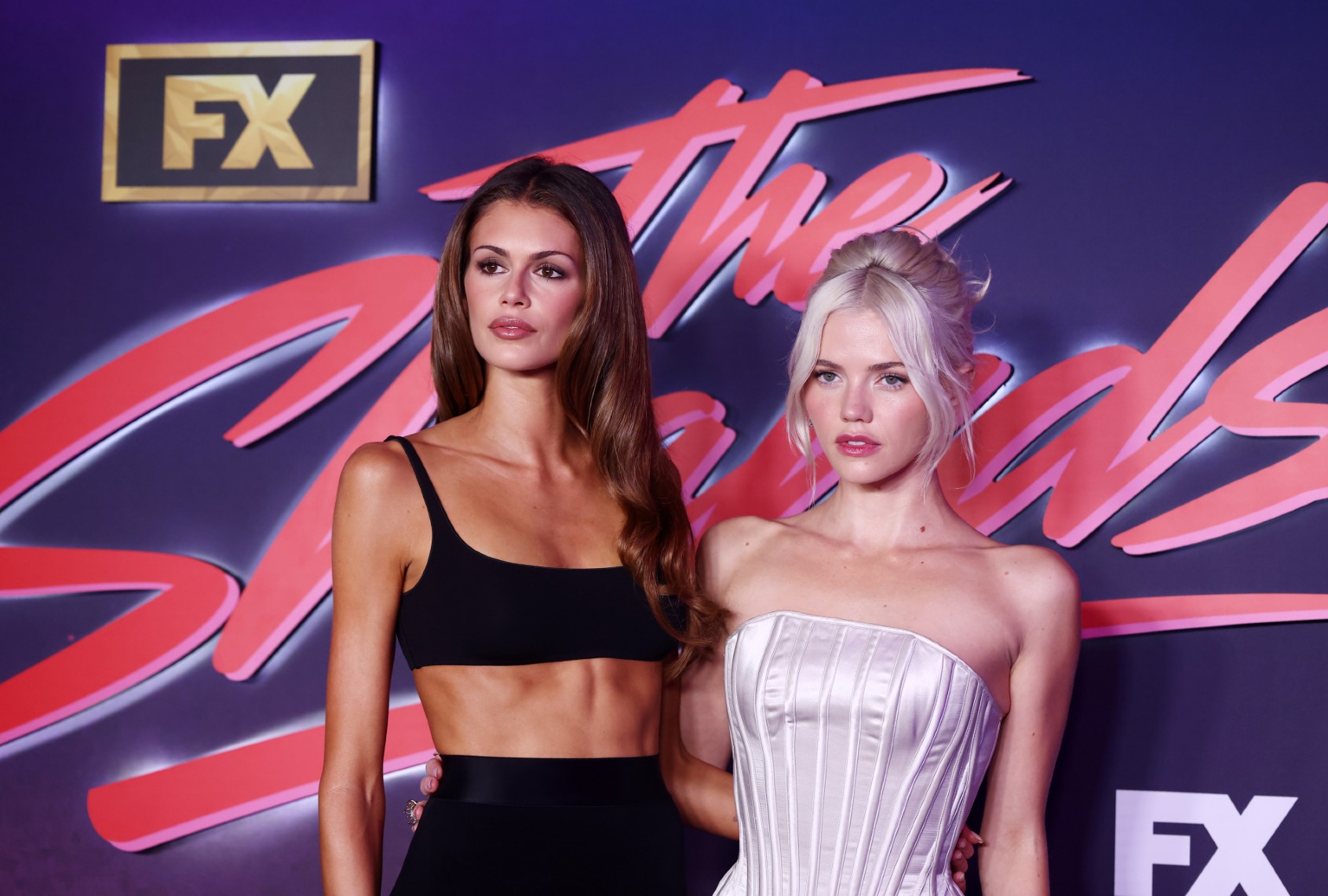
(Tommaso Boddi/Variety via Getty Images) Kaia Gerber and Hayes Warner at FX’s “The Shards” party
To that end, when Grande recently said “that sh*t is not mine to carry,” following a statement from her team that she is planning a break from the public eye after the “Petal” tour due, in part, to public scrutiny, she has a point. Hopefully her personal circle gives her the love and support that she deserves during that time. She has become the latest poster child for body issues, who the masses have decided to stack a mountain of (some of their own) baggage on top of.
In the last several years, Grande has been ubiquitous. She’s been on virtually every major red carpet, nominated for an Oscar, released a new album, launched a new tour, was cast in one project after the next, and appeared in countless social media and magazine interviews. During that time, people from every corner of the world online seemed to take every opportunity to scrutinize every contour of her frail frame.
But, as she also said, “many things can be true at the same time.”
It’s true that this article will undoubtedly bring even more unwanted attention to Grande’s body, but hopefully in a way that compels people to engage in more honest conversations about body image and their own complicity in female body issues. The discourse around these celebrities shouldn’t center, for instance, on whatever message their body image might be sending to young people who look up to them. To Grande’s point, and to be especially frank, that is more on those people and how their support systems help them better understand those images than her.
This is about how people express concern for young women whose bodies we’ve witnessed deteriorate on screen — and that they do at all.
Read more
about this topic