

By the time this article appears on Salon, the men’s national teams of Mexico and South Africa will be almost ready to take the field — sorry, the pitch — at Mexico City’s cavernous Estadio Azteca for the opening match of the 2026 FIFA World Cup. Playing at home, at 7,300 feet above sea level and before 80,000 or so rabid supporters, El Tri will be heavily favored to win. But however many supporters of Bafana Bafana (Zulu for “The Boys”) have made it there all the way from South Africa are certain to put on an upbeat, colorful display.
Whether that game is thrilling or boring, and no matter who wins, the focus will be on spectacle, showmanship and soccer, in roughly that order. There has been a predictable amount of disorder around the tournament in the Mexican capital, including a teachers’ strike and left-wing street protests. But neither the game nor any of that has anything to do with Donald Trump, who will not be on hand to get booed and pretend he’s being cheered. However security is handled, there will be no ICE officers surveying the crowd with facial-recognition software and abducting people for unstated reasons. Everyone who needed a visa to attend this game, as far as I know, got one with minimal fuss.
It’s a happy accident of sorts, if you choose to look at it that way, that the first couple of games in the largest and most troubled tournament in the ambiguous history of this overinflated event are taking place outside the United States, and may serve as modest reminders of what the World Cup is somehow, still, vaguely supposed to symbolize. (Later on Thursday, South Korea will play the Czech Republic in Guadalajara.)
It might also serve as something of a reality check. Almost everything negative that could possibly be said about this World Cup is true: It’s an egregiously expensive festival of interlocking consumerism and nationalism, plagued by staggering levels of corruption and set against a visibly crumbling but wildly ambitious quasi-authoritarian regime. When earnest liberals called upon FIFA, the governing body of world football-and-or-soccer (both words are legit and I refuse to litigate that issue), to bar the U.S. from competing or to cancel the tournament, an enormous epistemological error was involved: FIFA president Gianni Infantino is, if anything, a more shameless, soulless and sycophantic specimen than Donald Trump.
Still and all, the World Cup is literally too big to fail. It’s the biggest global showcase for the world’s most popular sport, not to mention a television and marketing enterprise many times larger than the Super Bowl, the NBA Finals or the Oscars. In an era increasingly dominated by “narrowcasting” and web streaming, roughly one-third of the world’s population is likely to watch the final match on July 19. Furthermore, for hardcore fans the idea that FIFA is a semi-criminal enterprise and the World Cup tournament something of a garbage fire is nothing new. Fandom of all varieties is a testament to the fact that hope springs eternal, and all true football fanatics know that this tournament has a history of pure-dee showboating and athletic glamour that makes it larger than its surroundings.
The front page of the French sports newspaper L’ÉquipeWelcome to the USAPretty apt to have Trump with his hand up Infantinos bottom during the World Cup run-in
— Steve Brewer (@sjbrewer.bsky.social) 2026-06-10T00:14:12.537Z
Sure, holding this extravaganza in the U.S. under the second Trump administration is both tragicomic and grim, for reasons I hardly need to explain here. (Despite those first-round games in Mexico and a handful in Canada, about 80 percent of the tournament will be held in the U.S., including both semifinals and the July 19 final at MetLife Stadium in New Jersey.) It’s already clear that teams and supporters from majority-Muslim nations are being subjected to arbitrary and punitive scrutiny, and a FIFA-licensed referee from Somalia with a valid visa was denied entry, for no known reason. All of that is shameful, and deeply contrary to the supposed traditions of international sport. Well, kind of: Let’s stop there for a minute and consider history.
Four years ago the World Cup was held in Qatar, an autocratic hereditary monarchy where homosexual activity is illegal, and whose stadiums and tourist venues were built by foreign laborers under a system akin to indentured servitude. That tournament also featured one of the greatest matches ever played, the thrilling, back-and-forth 3-3 draw between Argentina and France, finally won by Argentina on penalty kicks.
Four years before that, the tournament was in Russia — and, yeah, Vladimir Putin hadn’t officially invaded Ukraine yet (except that he actually had). That one also ended in brilliant fashion, with the stylish French team capping their glorious run with a 4-2 victory over Croatia’s gritty, gutty band of outsiders.
We could keep going: In 1978, the World Cup was held in Argentina, then under a brutal military dictatorship that disappeared dissidents by the thousands, sometimes by throwing them out of helicopters into the ocean. The Argentine team won the trophy, although that wasn’t the year of Diego Maradona’s infamous “Hand of God” goal, which happened eight years later in Mexico. If we go back to the tournament’s no-budget beginnings, the second-ever World Cup was won by Italy at home in 1934, under Benito Mussolini’s fascist dictatorship, in large part because Uruguay, the defending champions, refused to play.
So while it might seem like a rhetorical masterstroke to compare this year’s tournament to the 1936 Berlin Olympics under Hitler — a popular theme on social media this week — you’re not likely to impress or surprise any half-conscious world football fan with that analogy. An authoritarian regime is using this so-called festival of global togetherness to sportswash its crimes? Gotcha, that checks out. (The 2034 World Cup will be held in, ahem, Saudi Arabia, sportswashing regime par excellence.) This tournament is less about sportsmanship and athletic excellence than about pushing crappy beer and extortionate credit cards? Thanks for the heads up, champ. This year’s flatulent spectacle combines all the worst tendencies of consumer capitalism, surveillance-state policies and self-important sports machismo into a toilet-bowl perfect storm? Friendo, did you just wake up and figure out what decade this is?
It might seem like a rhetorical masterstroke to compare this year’s tournament to the 1936 Berlin Olympics under Hitler — a popular theme on social media this week — but you’re not likely to impress or surprise any half-conscious football fan with that one.
Tickets are outrageously expensive, as if to drive home the point that in the Land of the Free, one-percenters will pay literally any price for VIP treatment (or, frankly, for routine treatment) at these kinds of pseudo-significant events. Picking a game at random, the cheapest tickets I could find for the match between England and Ghana in Foxboro, Massachusetts, on June 20 were about $750 each. Tickets in the lower deck near midfield were about $1,250.
European visitors are learning first-hand exactly how dreadful American public transit is, and what actual hot weather feels like. Indeed, climate-change-fueled summer heat could be a disabling health hazard for players and traveling supporters alike; while stadiums in Dallas, Atlanta and Los Angeles are enclosed and temperature-controlled, those in Kansas City, New Jersey and Miami are not. (Yes, I said Miami. Outdoors. In the summer.) “Hydration breaks” will be introduced at roughly the 23rd and 67th minute of World Cup matches, finally fulfilling one of the TV networks’ most cherished desires: Chopping up soccer games to get in more commercials!
(Staff/AFP via Getty Images) Klaus Fischer of West Germany ties the score at 3-3 on a bicycle kick in extra time of the World Cup semifinal against France, July 8, 1982.
Given all that, no amount of skepticism or cynicism is unjustified. And yet: Even in this godawful Trumpian summer, millions of people around the world will hope to witness something magical that rises above the empty discord, something like that 2022 Argentina-France final, or — be still, my heart — something like the legendary 1982 semifinal between France and West Germany (as it was then) that my dad and I watched on Spanish-language TV — the only way it was carried live, without the then-new phenomenon of “cable” — from the comfort of his Naugahyde sofa.
In the middle of an otherwise routine article of jocular sportswriter predictions on The Athletic, Canadian journalist Joshua Kloke explained why he’s bringing his seven-year-old son to a match this year. His German-born grandparents, Kloke writes, had instilled a deep family loyalty to Die Mannschaft (the German national team), so he’s taking his kid to the June 20 match between Germany and Ivory Coast in Toronto. (A terrific choice, honestly.) He continues:
My grown man’s eyes get wide just thinking and talking about it. I’m choosing to pierce through all the ugly noise that surrounds the tournament and remember what it’s like watching your first World Cup as a child. What a rush. Maybe something happens during the game and he’ll latch onto the sport and tournament for good. It happened to most of us once. It’s a good, and pure, feeling while it lasts. It’s too soon to spoil it for him.
Well, OK then. So what about the U.S. team? Are they any good?
What about them indeed? The short version is that even if you’re feeling less than patriotic under current conditions, the U.S. men’s national team, circa 2026, comes with high drama and an intriguing storyline. They’re playing at home and coached by one of the biggest names in world football, Argentina’s Mauricio Pochettino, former head coach at Chelsea, Paris Saint-Germain and Tottenham Hotspur. By consensus, this is the most talented group of male American players ever assembled, led by lightning-quick winger Christian Pulisic, the first Yank to approach genuine stardom in a major European professional league.
You could feel me hedging more than a little there, right? That’s because the best-ever American men’s team is still just a notch or two above “bang average,” to use the standard Brit insult hurled at Yank players, and this team has yet to prove it can play Pochettino’s aggressive, attacking style with any consistency. Pulisic at his finest is definitely not bang-average, and he had a brilliant year for AC Milan in Italy — but it was last year, and in 2026 he virtually disappeared. For the U.S. to thrive in this tournament, it can’t be the Pulisic show, despite his ubiquitous appearance in beer and credit-card commercials. His supporting cast of Europe-based almost-stars will need to coalesce big time.
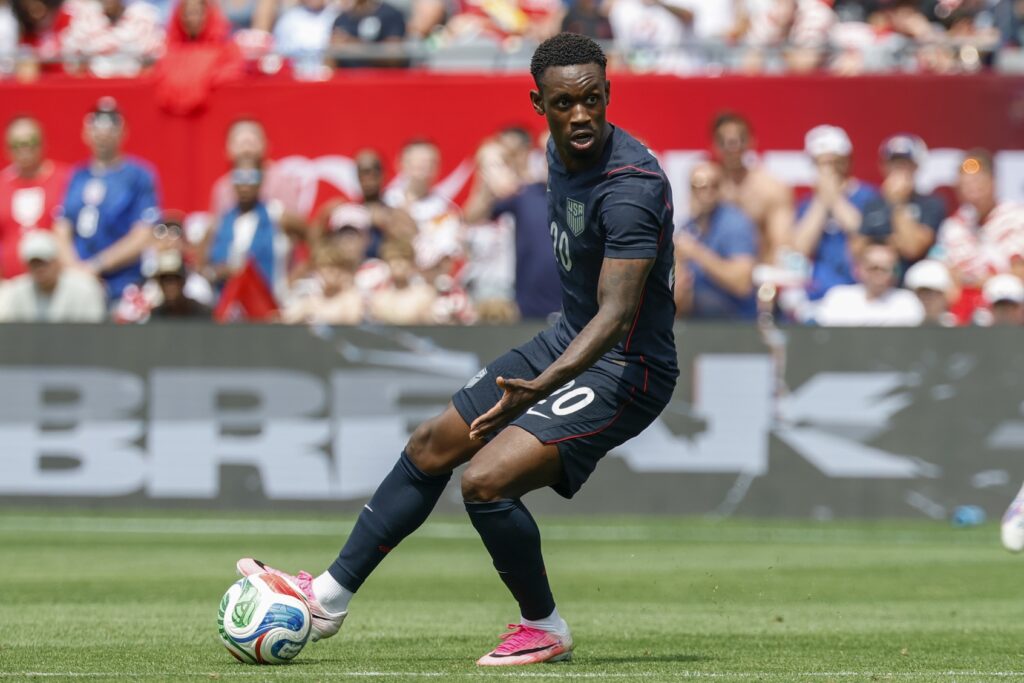
(Michael Miller/ISI Photos via Getty Images) Folarin Balogun of the U.S. national team during a friendly match against Germany in Chicago, June 6, 2026.
I’m looking at you, Weston McKennie of Juventus and Tyler Adams of Bournemouth, and maybe most of all at slinky-smooth forward Folarin Balogun, who scored 18 goals for Monaco in the French Ligue 1 last season. We’ll find out soon enough: On paper, the U.S. team should be able to beat its first two opponents, Paraguay and Australia, and slide into the knockout rounds as a favored seed. But lose either of those games and the flag-waving will be over real fast. If you’re not sure how you feel about that, I’m right there with you.
Admit it: You’re going to break down and watch, aren’t you?
Those U.S. games will make for compelling theater, but the Yanks’ chances of winning the tournament are mathematically indistinguishable from zero. (Reaching the round of 16 would be a fine result, and the quarterfinals would be fantastic.) So who’s going to win? No national team from outside Europe or South America has ever hoisted the World Cup, and while that will certainly change someday, it won’t be this year. If either France or Spain, the two teams most visibly loaded with big-name stars, don’t capture the prize on July 19, it will be at least a modest surprise — and will probably mean that either Argentina or Brazil has recovered from their self-torment and navel-gazing and gone on a spectacular run.
Start your day with essential news from Salon.Sign up for our free morning newsletter, Crash Course.
Look, if you can’t resist soaking up at least a little of the grandiose spectacle — either despite the awfulness of the larger meta-narrative or because of it — I won’t tell. It’s hard to tell how many first-round matches will actually mean anything this year, since 32 of the 48 teams will be moving on to the knockout stages and the most important task in early games is to avoid losing. We’ll see several startling upsets in this round that won’t end up mattering, along with a disheartening number of 0-0 and 1-1 draws. With that, here are my best guesses on the can’t-miss matches of the first round:
June 12: Canada v Bosnia (Toronto) A pair of lovable underdogs who both hope to be among the tournament’s surprises. Playing at home with the go-go style favored by American coach Jesse Marsch (a fact that took some adjustment up north, believe me!), the Canadians are always fun to watch. Bosnia barely snuck in via qualifying and is probably overmatched here, but the team’s biggest star, Esmir Bajraktarević, is a fun story: He was born in Appleton, Wisconsin, and played in Major League Soccer before deciding to commit his sporting future to his parents’ homeland.
June 13: Brazil v Morocco (East Rutherford, N.J.) It’s unusual to get such a terrific matchup right off the bat: The world’s most famous footballing nation, now led by superstar Italian coach Carlo Ancelotti — who looks more like a World Bank executive than a sports bro — against Africa’s most skillful team, loaded with European-based players. (Many nations draw heavily on their global diaspora for soccer talent, but Morocco is an extreme case: Only seven of the 26 players on the squad were actually born there.) There’s a chance both teams will decide it serves their interests to play a listless draw and share the orange slices. But I’m betting pride will speak louder than caution.
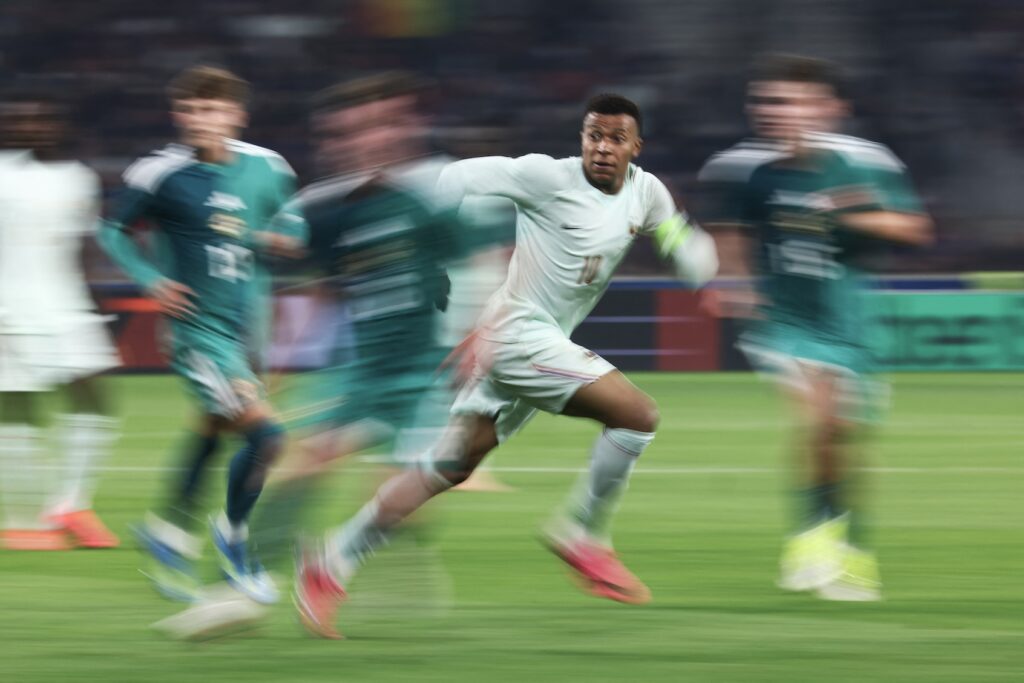
(Franck Fife/AFP via Getty Images) Kylian Mbappé of the French national team during a friendly match with Northern Ireland on June 8 in Villeneuve-d’Ascq, France.
June 16: France v Senegal (East Rutherford) You could call this one a post-colonial theorist’s delight, but more than anything else it’s a match between two top-shelf teams that value showboating elegance, occasionally to their own detriment. Despite the burden of history, there’s not as much animosity here as you might imagine: At least 10 players on the Senegalese team are French by birth, and several of the French players have Senegalese roots. Your first chance to see whether mercurial French forward Kylian Mbappé, the world’s best player, is paying full attention this year.
June 17: England v Croatia (Arlington, Texas) Could this be the year that England’s mighty Lions finally bring the World Cup “home” to the nation that invented the sport, launching a display of beer-soaked Union Jack patriotism to nauseate the world? Well, probably not. But starting against a gritty, grinding opponent with a long history of making better teams look bad will provide a useful test.
June 21: Spain v Saudi Arabia (Atlanta) Spain may have the most overall talent of any team in the tournament, and they’re barely getting tested in the first round. The Saudis have a record of startling upsets in international play; we might see that happen, or we might see Spanish wonder-teen Lamine Yamal score five goals.
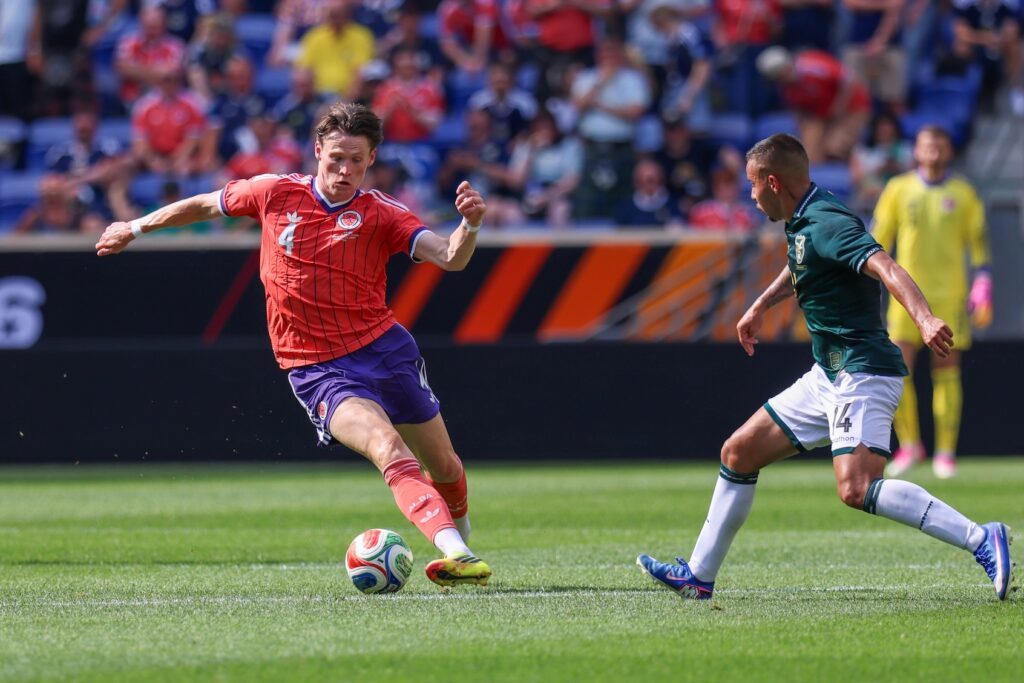
(Roger Wimmer/ISI Photos via Getty Images) Scott McTominay of Scotland in a friendly match against Bolivia in Harrison, N.J., June 6, 2026.
June 24: Scotland v Brazil (Miami) They are making a bunch of Scottish men play soccer — sorry, fitba’ — outdoors, in late June. In Florida. Against Brazil. Mind you, this Scottish squad, led by Scott McTominay of Napoli, have outdone themselves to get this far. Even if the Brazilians win 6-1 (which seems relatively likely), guys in Glasgow pubs will be talking about the magnificence of that one Scotland goal 30 years from now.
June 26: Norway v France (Foxboro) The French may have qualified for the second round by this point. If they haven’t, this tough, ambitious young Norwegian side, led by relentless goal-scoring machine Erling Haaland, could present a difficult challenge for Mbappé, Ousmane Dembélé and the rest of the superstar French lineup, which tends to pout and bicker when things aren’t going well.
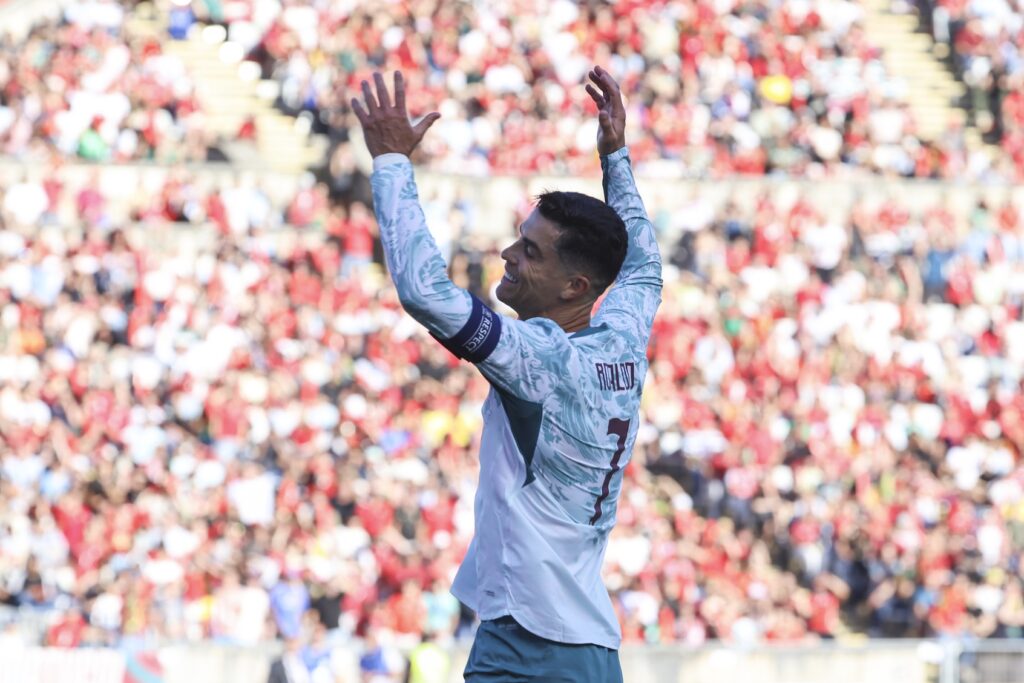
(Rita Franca/SOPA Images/LightRocket via Getty Images) Cristiano Ronaldo of Portugal during a friendly match against Chile at the National Stadium in Lisbon, June 6, 2026.
June 27: Colombia v Portugal (Miami) On the last day of the first round comes its best single matchup: Two evenly-matched sides with fading but still relevant superstars — Portugal’s Cristiano Ronaldo and Colombia’s James Rodríguez — that favor aggressive, attacking football and tend to feel that defense is for cowards. At least both teams are used to playing in the heat, because this one will be relentless.
Read more
from Andrew O’Hehir on our strange and amazing world


