

Lifestyle influencer Nara Smith, the couture-clad queen of tradwives, really wishes people would stop calling her a tradwife. She’s rejected the label several times before, but her recent conversation with “Call Her Daddy” podcaster Alex Cooper featured her strongest denial yet. To make her case, Smith read the term’s definition off her phone. Here’s the short version: Tradwives promote a traditional model of family life, prioritizing being a homemaker and a primary caregiver and supporting their husbands’ role as the primary breadwinner.
“I’m none of that,” she said. “And we can go through it point by point. I don’t prioritize being a homemaker. I’m a working mom. . . Sure, do I love cooking because it’s my passion and because I kind of have to do it given my autoimmune [condition]? Absolutely. But that’s a passion of mine. It’s a hobby. It’s not something that I need to be doing, for what?”
This doesn’t deviate from what Smith has said before about her health struggles. She began cooking everything from scratch after realizing that eating highly processed foods was contributing to her eczema flare-ups. She is also a model who married another model, Lucky Blue Smith, and regularly serves up a curated fantasy of ridiculous from-scratch culinary creations, all made for the love of Lucky and her four children.
We’re not simply talking about cakes. Smith makes treats like Skittles, gummy bears and pasta festooned with marigold petals, narrating each step in a baby-soft voice while wearing dreamy fits. Her kitchen, with its high-end tools and appliances, is as immaculate as her manicure. She built her fanbase — 12.6 million followers on TikTok, 4.8 million on Instagram — by savvily riding the illusory #tradwife trend when it was as fashionable as she is.
These days, however, that label is souring. With her first cookbook “Homemade” set for its nationwide release in October, she is redoubling her efforts to separate her image from one that’s becoming less commercially appealing by the moment.
“I don’t necessarily see where the tradwife angle is coming from, because I don’t think a tradwife would be cooking in, like, Schiaparelli, or, you know, a Moschino look straight off the runway,” she told Cooper. “Like, I don’t think that’s what a tradwife would do.”
Smith is one of many influencers working overtime to distance themselves from the tradwife brand amid a confluence of cultural tipping points. As right-wing conservatism grows increasingly noxious in its push to march Gen Z women back to the kitchen, a countermovement of ex-tradwives has risen and is sharing details about the realities of surrendering your agency to a man, disclosing stories of abuse and financial ruin.
Then there’s “The Secret Lives of Mormon Wives,” which returned Thursday with a shorter fifth season. It quickly became a phenomenon after its record-setting premiere in 2024. But earlier this year, the show took a reputational dive after its top star Taylor Frankie Paul became embroiled in a domestic abuse scandal that led to the cancellation of her season of “The Bachelorette.” The “Mormon Wives,” a group of women associated with the social media clique known as #MomTok, never neatly fit the internet’s definition of tradwives, either. However, they touted a similar belief system based on God-centered lives focused on marriage and children — even as they became famous for introducing the concept of “soft-swinging.”
Television and the sales pitch of domesticity have always been closely aligned. Since the medium’s earliest days, Madison Avenue assumed that in households well-off enough to afford television sets, daytime audiences were mostly women who influenced household spending. This is how the happy housewife became part of our cultural landscape.
Like most made-for-TV illustrations, these fantasies didn’t reflect life for most people, and certainly not working-class families with two working parents. Academics and cultural analysts shred that fallacious nonsense every time someone representing the Heritage Foundation or Turning Point USA or any entity espousing pronatalist views calls for a return to the glory days of traditional values and stay-at-home women.
But that didn’t prevent these notions from taking root on social media or networks like Hulu.
(Bruce Glikas / Getty Images) Whitney Leavitt poses with her “Secret Lives of Mormon Wives” castmates at the after-party for her Broadway debut in “Chicago” on Feb. 2, 2026, in New York City
Once upon a time, platforming a trend on TV was the surest way to kill it. That may yet be the case, given tradwifery’s deteriorated reputation on the boob tube. TLC’s recent answer to “Mormon Wives,” “Double Lives of Suburban Wives,” introduces a St. Louis-area community of conservative Christian women who decorate their homes with crucifixes, make “spicy content” for adult subscribers, and natter about their ethically non-monogamous relationships. But despite the OnlyFans of it all, the show carries a sadness it can’t shake tied to America’s economic reality. Many of the women in this group became cam girls because they or their husbands lost their jobs or weren’t getting paid enough to make ends meet. Some of them are former schoolteachers.
Meanwhile, Netflix’s current top-rated title, “Death of the Pastor’s Wife,” revolves around lurid details of the abuse and sexual exploitation going on behind closed doors in a marriage presented as ideal to a church’s congregation. “Suburban Wives” makes fundamentalist marriage look messy and boring, while “Pastor’s Wife” contributes to the growing awareness that submitting to a man just might kill you.
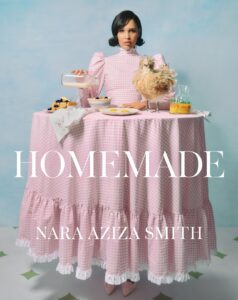 (Harper Collins)Smith isn’t wrong to want a divorce from all that, or in her assertion that she never fit the mold. In her household, she pulls in an annual income Forbes estimates at $7.5 million. Her influence is why she and her husband are invited to red carpets and field sponsorship offers.
Smith is also building her empire on a warped version of “proper” domesticity and femininity that, whether or not she intends it to, reinforces a damaging message that the manosphere and fundamentalist Christian communities preach to impressionable people.
She shares this with Hannah Neeleman, the Ballerina Farm influencer who recently opened a boutique in Midway, Utah, that is driving locals up the wall. Neeleman also vocally refutes the idea of being a tradwife while, for example, showcasing the joys of making homemade cheese while an infant is strapped to her.
But neither Neeleman nor Smith, nor the “Mormon Wives” or any top tradwife influencers, started from places of privation. Even before #MomTok was a known entity, the wives lived in luxurious homes. Neeleman’s husband is the son of JetBlue Airways’ billionaire owner. Lucky Blue Smith is part of a prominent Mormon family.
What that means, then, is that Smith and Neeleman and other so-called tradwives who claim they were never tradwives always had both the time and financial cushion to content-create a politically influential movement into a force for rewinding progress.
Want more from culture than just the latest trend? The Swell highlights art made to last.Sign up here
Smith is fresh off a cameo appearance on “Project Runway.” Soon, we’ll likely see her make the usual publicity rounds for her book, popping up on “Today” and “Good Morning America” along with other podcasts to sell herself as her generation’s Martha Stewart. They, too, have much in common. Stewart was a model before she became the queen of household elegance; both worked before figuring out how to market the joys of homemade living to people yearning to reconnect with the pleasures of hearth and home.
Stewart was also divorced by the time her empire was at its peak — and people also criticized her, for different reasons. The homemaking marketplace Smith is ascending into is challenged by a stagnating economy, poisoned politics, and a curdled fable of domesticity she helped normalize, no matter how vehemently she denies it. Her book is bound to be a bestseller anyway. We can’t resist a pretty confection, no matter how bad for us it might be.
Read more
about the pop culture lives of housewives


