

Every time a megacorporation does something that is so categorically, unequivocally, indisputably, jaw-droppingly, beyond a shadow of a doubt, all-caps “BAD”, one has to wonder: Haven’t the greaseballs in charge heard of a little thing called karma? The intoxicating high of money and power must cloud a person’s mind to a degree that they can no longer sense the connection between physical reality and the laws of nature, sort of like getting really drunk at a Western bar and thinking it’s a good idea to hop on the mechanical bull. It’s a one-track, single-minded way of thinking, eerily reminiscent of, oh, I don’t know, a hungry coyote blindly pursuing a roadrunner. Perhaps the bigwigs at Warner Bros. have more in common with Wile E. Coyote than they realize — or, even likelier, more than they’re willing to admit by drawing a straight line between a film like “Coyote vs. Acme” and the parent company that produced it.
After three years of uncertainty, the latest feature-length spinoff of the “Looney Tunes” franchise has finally, blessedly, reached theaters nationwide. But for most of those three years, it looked as though “Coyote vs. Acme” might never see the light of day. In late 2023, Warner Bros. announced that the film — which sees Wile E. Coyote sue the Acme corporation after he tires of their defective products failing him in his pursuit of the Road Runner — had completed production. (Hooray!) The studio also announced that they were scrapping the finished film for a $30 million tax write-off. (Hoora-, wait . . . boo!)
(Ketchup Entertainment) Will Forte in “Coyote vs. Acme”
It’s easy to see why Warner Bros. would choose this specific film to scrap. If you’ve ever felt powerless amid the growing disparity between yourself and the establishment, this is the time to show up and have your price of admission counted.
The egregious business decision drew instant ire from all sides. The public torched Warner Bros. online. Agents and actors cancelled meetings. Angry filmmakers left angrier voicemails. And while Warner Bros. quietly allowed the movie to be shopped to different studios, no one met their price. Finally, after two years in limbo and a tax write-down check successfully cleared, Warner Bros. offloaded the film to Ketchup Entertainment at a discount in early 2025. “Phew!” the WB execs said, exhaling and wiping their brows. “Now that that’s over with, we can rectify our reputation in the eyes of the public. They’ll love us again!”
Flash forward a year and some change to “Coyote vs. Acme,” an utterly anti-capitalist and anti-big-corporation spin on the “Looney Tunes” franchise, hitting theaters just as Warner Bros. is mired in controversy around the proposed $111 billion Paramount-Warner Bros. merger. This is what we of sound mind and body like to call karma coming a’knockin’.
Want more from culture than just the latest trend? The Swell highlights art made to last.Sign up here
Not only does “Coyote vs. Acme” hitting theaters right now make Warner Bros., Paramount and just about every other major studio pulling the strings in Hollywood look even worse; it also makes the film itself look even better. Directed by Dave Green and written by Samy Burch, the movie is a loving tribute to the idiosyncrasies of the “Looney Tunes” universe and its colorful characters, as well as a scathing takedown of megacorporations and their unsavory operations. The film balances these two tones with aplomb, as “Looney Tunes” so often does. For as many sticks of dynamite as Wile E. Coyote endures, there are just as many bombs dropped on capitalist greed, suppression of dissenting voices, and the ironic injustice of the American legal system.
It’s easy to see why Warner Bros. — or any major studio, really — would choose this specific film to scrap. The fact that we can see it at all is a miracle in modern moviemaking, when so many productions never clear the enormous obstacles in their way. And that’s precisely why it’s so important that as many people as possible support “Coyote vs. Acme” in theaters. If you’ve ever felt powerless amid the growing disparity between yourself and the establishment, this is the time to show up and have your price of admission counted.
But the thrill of getting a small, albeit satisfying lick back against a corporation is only one part of the fun. Every hard-earned dollar put down in the name of “Coyote vs. Acme” also goes toward ensuring that “Looney Tunes,” as a property, survives. Warner Bros.’ probable apprehension over how the film depicts corporations like its own is only one layer of this big, genetically modified cartoon onion. There’s also the fact that “Looney Tunes,” as beloved a property as it is, has some substantial mileage on it. While its many televised iterations are sturdy, with both original shows and episodic compilations running in syndication, the “Looney Tunes” films are dwindling in number. 2025’s “The Day the Earth Blew Up” — which Ketchup Entertainment also procured from Warner Bros. — was a solid success, earning a $15 million gross on a $15 million budget.
But recouping money usually isn’t enough for a studio like Warner Bros., which is always looking for profit margin, not break-even figures. And though 2021’s “Space Jam: A New Legacy” made money, it was a critical and cultural flop. Toss in the fact that, before that sequel, there hadn’t been a new, original theatrical “Looney Tunes” film since 2003, and the message to a studio becomes clear: “Looney Tunes” is no longer a money-making, blue-chip franchise. So they’ll stop making “Looney Tunes” movies altogether.
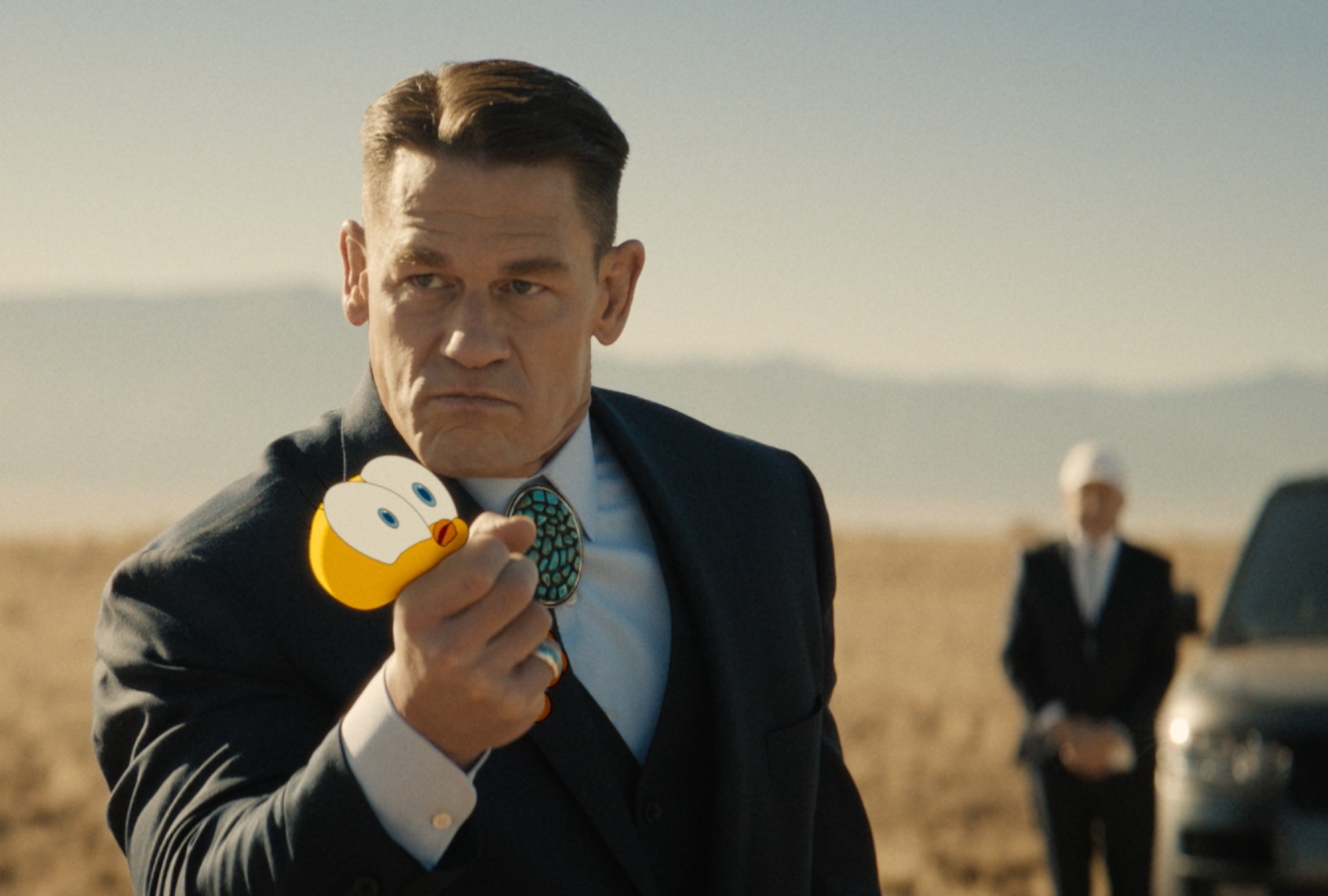
(Ketchup Entertainment) John Cena in “Coyote vs. Acme”
If you’re someone who just wants to read about the cartoon and doesn’t care about all those figures, here’s the brass tacks: By showing up to see “Coyote vs. Acme,” you’ll get to show Warner Bros. that people still care about “Looney Tunes” and give the company a middle finger. For anyone who loves movies, cartoons, or thwarting the capitalist regime by putting power in the hands of the people with information about industrialist misdeeds, it’s a win-win-win situation. Plus, you get to see Wile E. Coyote get blown up 100 times. What could be better? For starters: The movie itself.
Based on Ian Frazier’s brilliant satirical article in a 1990 issue of “The New Yorker,” the film expands on its original scribe’s ingenious idea, turning the trials of one Wile E. Coyote into an actual trial. After years of TNT blasts, fake desert murals, disguises and plummeting into canyons, Wile E.’s last straw is a defective pair of Acme rocket skates that, of course, malfunction and leave Wile E. blackened and fried. At his wits’ end, Wile E. catches an advertisement for the services of small-time claims attorney Kevin Avery (Will Forte), who specializes in cartoon injuries rendered by faulty Acme products.
It’s because the public didn’t turn a blind eye to Warner Bros. decision to scrap “Coyote vs. Acme” that the film made its way into the right hands. But if people don’t show up, all that outcry will be for nought, and the very cigar-smoking suits who tried to make the film quietly disappear will move on to their next sacrifice, their next merger, their next monopoly.
Encouraged by his plucky, bright-eyed niece and legal aid, Paige (Lana Condor), Kevin reluctantly takes on Wile E.’s case, not realizing just how dogged his latest defendant is. Wile E. won’t settle — literally or figuratively. He wants to be properly compensated for his damages, going behind Kevin’s back to push the lawsuit higher up along the legal ladder and incurring the wrath of Acme’s head lawyer and Kevin’s law school rival, Buddy Crane (John Cena). But as Wile E. and Kevin begin to pull at the seams, they stumble into a larger conspiracy that goes far beyond defective products, roping in all sorts of “Looney Tunes” characters in unexpected, hysterical ways. Take poor Daffy Duck, living up to his namesake, spending his days painting watercolors in the pleasant confines of a cartoon asylum. But who put him there? Kevin, Paige and Wile E. will stop at nothing to find out.
The whole affair builds into a major national trial and media circus that stands to expose Acme’s misdeeds and change the way that the company, and all major corporations in America, do business. Naturally, nothing is ever quite so easy — not that ramping up the case into something so significant was in the first place. Justice demands courage and gumption. And who better to teach a down-and-out lawyer about courage and gumption than a coyote who has persevered in the face of certain failure?
It’s a lesson that so many people, both kids and adults, need to learn or remember. Doing what’s right is often a thankless endeavor, but that doesn’t make it any less important. And in a culture where megacorporations are betting that the little guy (or little cartoon) will lie down and take it — or worse, actively suppress opposing voices — “Coyote vs. Acme” is all but imperative viewing. Just last week, Paramount tried to smear Mark Ruffalo for speaking out against the Paramount-Warner Bros. merger, a move that is quite literally part of Buddy Crane’s playbook in the film. It all looks just a little too real, but that’s exactly why we shouldn’t look away.
It’s because the public didn’t turn a blind eye to Warner Bros. decision to scrap “Coyote vs. Acme” that the film made its way into the right hands. That’s a real, tangible measure of success, available to watch live and in color on the big screen. But if people don’t show up, all that outcry will be for nought, and the very cigar-smoking suits who tried to make the film quietly disappear will move on to their next sacrifice, their next merger, their next monopoly. It’s so sneeringly wicked that it almost seems cartoonish, doesn’t it? Good thing “Coyote vs. Acme” reminds us just how seamlessly cartoons and real life can blend.
Read more
about the latest in animation


